Cómo deshacerse de pezones hinchados en hombres: Opciones quirúrgicas y no quirúrgicas
Cómo deshacerse de pezones hinchados en hombres: Opciones quirúrgicas y no quirúrgicas
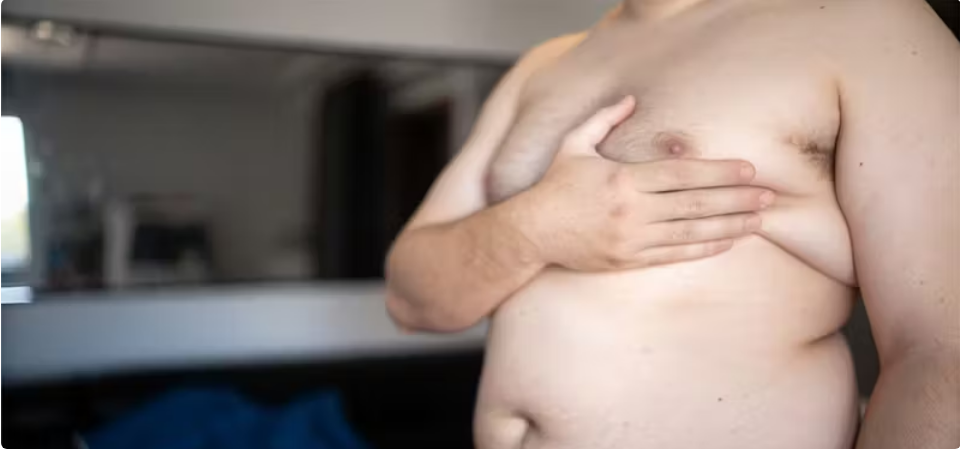
Los pezones hinchados son tejido glandular sentado directamente debajo de la areola, empujando hacia adelante. Es por eso que la pérdida de peso y el entrenamiento de pecho no los aplanan — y por qué construir sus pecs puede hacer que se vean más prominentes, no menos. Eliminar la glándula es lo que cambia la forma.
Escapadas clave
- Es glándula, no grasa — concentrado bajo la areola específicamente.
- El entrenamiento puede empeorar. El músculo empuja la glándula hacia adelante.
- La areola a menudo se encoge después de la extirpación de la glándula.
- Eliminar demasiado es el riesgo real, no quitar demasiado poco.
Qué "Puffy Nipples" realmente son
Los pezones hinchados son una forma de ginecomastia, pero son uno distintivo — y la diferencia es sobre localización en lugar de cantidad.
En una presentación general de ginecomastia, todo el pecho se ve más lleno. En éste, el volumen se concentra en un pequeño disco de tejido glandular sentado directamente debajo de la areola. Ese disco empuja la areola hacia adelante, por lo que doma hacia fuera en lugar de acostarse plana contra el pecho.
Es por eso que los hombres con pezones hinchados son a menudo inclinados, y a menudo frustrados. El pecho en su conjunto puede verse bien. El problema se limita a un par de pulgadas, y se muestra a través de una camiseta.
Gland o fat — un duro autocontrol
- Pinch directamente debajo de la areola. Un disco firme y caucho que se siente distinto del tejido que lo rodea sugiere glándula.
- Alargar el pecho exterior. Suave, incluso la plenitud sugiere grasa.
- Piensa en el peso que ya has perdido. Si te inclinas y la areola sigue protruyendo, eso apunta a la glándula.
Una guía para la conversación, no un diagnóstico. El examen lo resuelve.
Por qué el gimnasio lo hace parecer peor
Esta es la parte que atrapa a la mayoría de los hombres, y vale la pena entender antes de pasar otro año entrenando alrededor de ella.
El músculo pectoral se sienta detrás el tejido glandular. A medida que el músculo crece, empuja todo delante de él más adelante — incluido el disco bajo su areola. Así que el pecho mejora y el pezón empeora.
Obtener inclinación funciona de la misma manera desde la dirección opuesta. La reducción de la grasa en el pecho elimina el vracs circundantes que en parte camuflaba el disco, por lo que lo que queda destaca más agudamente.
Ninguno de estos medios está haciendo nada malo. Los hombres con esta presentación a menudo entrenan el pecho más duro precisamente para arreglarlo, y el entrenamiento funciona exactamente como se pretendía — en el músculo. El tejido glandular no responde a él, que es un hecho sobre el tejido en lugar de un hecho sobre su esfuerzo.
Opciones no quirúrgicas: Lo que se aplica de manera genuina
Dos situaciones donde algo más que la cirugía tiene una posibilidad real.
Si una causa sigue activa
Cuando un medicamento lo está conduciendo, la interrupción del agente contribuyente a menudo resulta en regresión dentro de unos tres meses. Ese es un resultado verdaderamente bueno — pero la decisión pertenece al médico que lo prescribió, nunca a usted, porque varios de los fármacos involucrados tratan las condiciones en las que la parada es considerablemente más arriesgada que la ginecomastia.
Los esteroides anabólicos son la excepción que vale la pena decir claramente: ginecomastia relacionada con esteroides es a menudo irreversible, por lo que detener generalmente no deshacer tejido que ya se ha formado. El detalle en que se sienta en su propia página — gino de esteroides o medicamentos.
Si es reciente
Los medicamentos utilizados para tratar el trabajo de la ginecomastia mejor cuanto antes se inician después de que aparezcan síntomas. La cirugía, por contraste, se puede realizar en cualquier momento con resultados similares.
Así que la ventana médica cierra mientras la quirúrgica permanece abierta. Lo que los ensayos publicados muestran realmente sobre esos medicamentos está cubierto en do no-surgical gynecomastia tratamientos trabajo — es más mezclado de lo que sugiere la mayoría de las páginas.
¿Qué no funciona?
- Ejercicio de pecho. Por la razón anterior — puede empeorar la apariencia.
- Pérdida de peso, para la parte glandular. It reduces fat, which helps where fullness is fatty. It does not reduce gland.
- Supplements, creams and “estrogen blockers.” No good evidence that any of them remove glandular tissue, and because supplements are not regulated as medicines, what is in the bottle is not verified.
- Fat-reduction treatments. They act on fat. If a firm disc remains under the areola afterward, that is gland, and it needs excising.
Surgical Options
When the tissue is glandular and established, removing it is what changes the shape.
| What it is | What it addresses |
|---|---|
| Gland excision | The glandular disc itself, removed through a small incision at the edge of the areola where the color change helps conceal the scar |
| Liposuction | The surrounding fatty chest, blending the area so the result does not look patched. Often done alongside excision |
| Liposuction alone | Reasonable where the fullness is genuinely fatty rather than glandular |
The areola usually gets smaller
This surprises people, and it is generally welcome.
The areola may reduce in size by anywhere from ten to fifty percent, most often where a significant amount of gland was removed. The reason is simple: the areola had been stretched by the tissue pushing it forward, and removing that tissue lets it settle.
The risk that matters on this operation
It is not removing too little. It is removing too much.
Taking out excessive tissue from directly beneath the areola can leave a dished or sunken contour — and that is considerably harder to correct than the original puffiness was. Judgment about how much to leave is the part of this operation that experience buys.
Worth knowing when you weigh timing: long-standing cases, higher-grade cases and one-sided cases are all associated with more surgical complications. Waiting is not cost-free even where surgery remains available.
Recovery, in Brief
Drains and sutures usually come out at the first follow-up, five to seven days after surgery. Most men return to work within seven to ten days.
Swelling can take three months or more to settle, and that is when the contour becomes real. Judging your result at three weeks means judging swelling.
The full course — including the movement rule for the first three days, which matters more than people expect — is set out in what to expect after gynecomastia surgery.
Should You Wait?
In adolescence, often yes. Physiologic gynecomastia usually resolves within six months to two years of onset, and intervening early can mean operating on something that was going to settle anyway.
Beyond one to two years, persistence suggests a cause worth investigating rather than more waiting. At that point the question has changed from “will this resolve” to “why has it not”.
What to Ask at a Consultation
Useful questions
- Is mine gland, fat, or both? Everything else follows from this.
- Would liposuction alone do anything for me, or does the gland need excising?
- Where exactly will the incision sit, and how long is it?
- How much tissue will you leave behind, and why that amount?
- Is my areola likely to reduce in size?
- Could anything I take be contributing? Bring a full list, supplements included.
- How many of these have you done? A fair question on this specific presentation.
Get examined rather than assuming
A new lump on one side only — particularly if it is hard, fixed in place, sitting away from the center of the areola, or accompanied by skin changes, nipple retraction or discharge — needs assessing by a doctor. Male breast cancer is uncommon, but it exists, and it is not something to settle by reading. Bring it up promptly rather than waiting for a consultation about appearance.
The gland-or-fat question decides which of these options applies to you — and it is answered by examination, not online. Dr. Michael Baumholtz is double board-certified in plastic surgery and general surgery, with more than two decades of experience in San Antonio.
Acerca de la cirugía ginecomastia · Consulta virtual · Solicitar un nombramiento
Preguntas Frecuentes
What causes puffy nipples in men?
Glandular breast tissue sitting directly beneath the areola, which pushes it forward into a domed shape. It is a form of gynecomastia, distinguished by where the tissue is concentrated rather than by how much there is. Hormonal shifts at puberty, certain medications, anabolic steroids and alcohol can all drive it, and in many men no specific cause is ever identified.
Can you get rid of puffy nipples without surgery?
Sometimes, if the cause is still active and recent. Removing a medication that is driving it often gives regression within about three months, and medications used to treat gynecomastia work better the earlier they are started. Once glandular tissue is established, nothing non-surgical removes it.
Why do my puffy nipples look worse since I started lifting?
Because the pectoral muscle sits behind the glandular tissue. As the muscle grows it pushes that tissue further forward, so the areola protrudes more rather than less. Getting leaner removes surrounding fat, which can make the remaining disc stand out more clearly. Neither effect means you are doing anything wrong.
Will losing weight get rid of puffy nipples?
Only the fatty component. Weight loss reduces fat across the chest, so it helps where fullness is fat rather than gland. It does not reduce glandular tissue, and in leaner men the glandular disc under the areola often becomes more visible once surrounding fat has gone.
How do I know if mine is gland or fat?
Gland feels firm and rubbery, is concentrated directly beneath the areola, and is often distinct from the softer tissue around it. Fat is softer and spread more evenly. Many men have both. Examination settles it, and the answer determines which options are realistic for you.
What does puffy nipple surgery involve?
Removing the glandular tissue through a small incision placed at the edge of the areola, where the color change helps conceal the scar. Liposuction is often used alongside it to blend the surrounding chest so the result does not look patched. Where the fullness is purely fatty, liposuction alone may be enough.
Will my areola get smaller after gland removal?
Often, yes. The areola may reduce in size by anywhere from ten to fifty percent, most commonly where a significant amount of gland was removed. This is because the areola was being stretched by the tissue underneath it. Most men find this a welcome change once they know to expect it.
Can too much tissue be removed?
Yes, and it is the complication that makes experience matter on this particular presentation. Removing too much from directly beneath the areola can leave a dished or sunken contour, which is more difficult to correct than the original problem. A conservative, well-judged removal matters more here than an aggressive one.
How long does recovery take after puffy nipple surgery?
Drains and sutures usually come out at five to seven days, and most men return to work within seven to ten. Swelling can take three months or more to settle, which is when the final contour appears. Judging the shape before then means judging swelling.
Should I wait to see if puffy nipples resolve on their own?
In adolescence, often yes — physiologic gynecomastia usually resolves within six months to two years. Beyond one to two years, persistence suggests a cause worth investigating rather than more waiting. Delay does not close the surgical option, but it does close the medical one.
I have a new lump on one side only. Is that normal?
Get it examined rather than assuming it is gynecomastia. A new one-sided lump, particularly if it is hard, fixed in place, away from the center of the areola, or comes with skin or nipple changes or discharge, needs assessing by a doctor. Male breast cancer is uncommon but it exists, and this is not a question to settle online.
La respuesta corta
Puffy nipples are a disc of glandular tissue under the areola. Chest training pushes it forward and getting leaner uncovers it, which is why the gym tends to make the appearance worse rather than better.
If a cause is still active, removing it can work — about three months for regression where a medication is responsible. If the tissue has been there for years, excision is what removes it, and the areola often reduces in size along with it.
The one thing worth getting right is how much tissue comes out. Too little leaves the problem. Too much leaves a harder one.
Orígenes
- American Academy of Family Physicians — Gynecomastia: Pathophysiology, Evaluation, and Management
- The Aesthetic Society — Gynecomastia Aftercare and Recovery
This article is general information and is not a recommendation to start, stop or change any medication, nor a substitute for examination by a physician. Never stop a prescribed medication without speaking to the doctor who prescribed it. Last reviewed October 2026.