

Contorno del cuerpo quirúrgico vs. no quirúrgico: ¿Cuál realmente necesita?
Sí. Dr. Michael Baumholtz, MD, FACS — Cirujano de plástico certificado · Publicado 8 de octubre de 2026

La diferencia se reduce a una cosa: cirugía extirpa tejido, tratamientos no quirúrgicos no. Si su preocupación es la piel suelta, la cirugía es el único enfoque que la elimina. Si su piel es firme y el problema es un bolsillo obstinado de laxidad grasa o leve, el tratamiento no quirúrgico puede ser suficiente. Ningún dispositivo apreta la piel de la forma en que una operación lo hace.
📌 Escapadas clave
- La piel delgada requiere cirugía. Ningún dispositivo no quirúrgico elimina el exceso de piel.
- Laxidad leve y pequeños bolsillos de grasa a menudo responden bien a opciones no quirúrgicas.
- Los tratamientos no quirúrgicos necesitan un curso y mantenimiento continuo.
- La cirugía cuesta más arriba y normalmente ofrece un cambio más grande y duradero.
- Tampoco es un método de pérdida de peso. Ambos contornos; ninguno reemplaza la gestión de peso.
Empieza con la pregunta correcta
La mayoría de la gente comienza preguntando "¿cirugía o no?" Esa es la primera pregunta equivocada.
La pregunta útil es: ¿Qué está causando realmente la forma que no me gusta? Hay tres posibles respuestas, y apuntan a diferentes soluciones.
- Exceso de grasa con buen tono de piel → liposucción, o en casos leves reducción de grasa no quirúrgica.
- Plástico o colgante → cirugía, porque la piel tiene que ser removida.
- Laxidad leve y textura crepey → El endurecimiento de la piel no quirúrgica puede realmente ayudar.
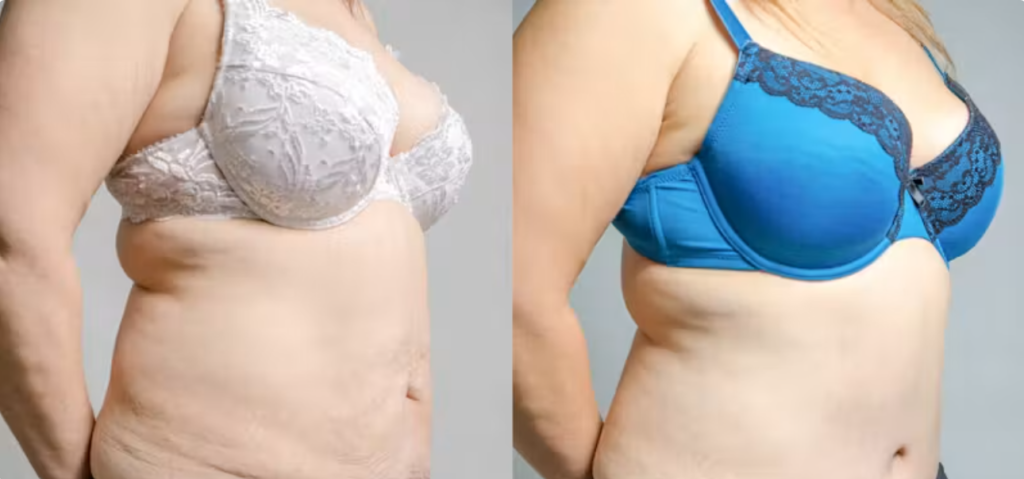
Una prueba simple en casa: pinche el área. Si usted puede agarrar el tejido blando que retrocede, el problema es en gran medida grasa. Si la piel se mantiene floja y no se retracta, eso es laxidad, y ningún dispositivo lo elimina.
Aprende más acerca de Arm Lift (Brachioplastia) en San Antonio
Lo que cada enfoque realmente hace
| Cirugia | No quirúrgica | |
|---|---|---|
| Quita el tejido | Sí. — grasa, piel o ambos | No extirpación de la piel; algunos tratamientos reducen el volumen de grasa |
| Mejor | Piel de la piel, grasa significativa, separación muscular | Laxidad leve, pequeños bolsillos de grasa, textura |
| Sesiones | Una operación | Un curso, más mantenimiento |
| Hora de dormir | Semanas | Poco a nada |
| Resultados visibles | Inmediatamente, refinando durante meses | Poco a poco más de 3 a 6 meses |
| Scarring | Cicatrices permanentes, colocación planificada | Ninguno |
| Longevidad | Larga duración con peso estable | Requiere mantenimiento |
| Anaestesia | Sí | No |
Opciones quirúrgicas
La cirugía es la respuesta correcta cuando el tejido tiene que salir.
- Liposuction elimina grasa obstinada del abdomen, flancos, muslos, brazos, espalda y mentón. Requiere buena elasticidad de la piel para producir un resultado suave.
- Tummy tuck elimina la piel abdominal floja y repara los músculos separados. La única opción que aborda la diástasis recti.
- Ascensor de armas elevación del muslo eliminar la piel colgando de los brazos y los muslos superiores, generalmente después de la pérdida de peso mayor.
- Levantamiento del trasero brasileño usa liposucción más transferencia de grasa para remodelar las nalgas.
- Mami maquillaje combina procedimientos abdominales y mamas después del embarazo.
Aprende más acerca de Peels químicos en San Antonio
¿Qué cirugía te pregunta?
- Tiempo de recuperación medido en semanas, con restricciones de actividad.
- Cicatrices permanentes, colocado para ser oculto pero no invisible.
- Peso estable antes y después, ya que la ganancia o mayor pérdida cambia el resultado.
- Costo superiorDe [SURGERY PRICE RANGE]. See fijación de precios y financiación.
Opciones no quirúrgicas
Los tratamientos no quirúrgicos funcionan estimulando los propios procesos del cuerpo en lugar de eliminar el tejido.
- Reforzamiento de la piel de frecuencia de radio — calienta capas más profundas para contraer colágeno existente y estimular nuevo colágeno durante tres a seis meses. Mejor para la laxidad leve a moderada.
- Microneedling — mejora la textura y estimula el colágeno, principalmente para la calidad de la piel en lugar de contorno.
- Avéli — un tratamiento mínimamente invasivo que libera las bandas fibrosas que causan dimples de celulitis.
- Pérdida de peso médico — no contorno, pero relevante para pacientes cuyo objetivo es la reducción general de peso primero.
What non-surgical treatment asks of you
- Patience. Results build over months rather than appearing immediately.
- A course of sessions, typically several weeks apart, plus maintenance.
- expectativas realistas. The change is a refinement, not a transformation.
- Ongoing cost, from [RF PRICE] per session, which adds up across a course.
Where Patients Go Wrong
Three mistakes come up repeatedly in consultation.
Expecting a device to do a surgeon’s job
Non-surgical treatments are marketed heavily, and the marketing rarely says what they cannot do. A patient with significant loose skin after major weight loss will not get it removed by any device, however many sessions they pay for.
Choosing liposuction when skin is the problem
Removing fat from an area with poor skin elasticity can make looseness more obvious, not less. This is why assessment matters more than the procedure you arrived wanting.
Aprende más acerca de Laser Hair Removal in San Antonio
Treating contouring as weight loss
Neither approach is a weight-loss method. Liposuction removes localised fat deposits; it does not reduce overall body weight meaningfully. Patients get the best results when they are at or near a stable weight first.

When Combining Makes Sense
These are not competing categories. Many patients use both at different points.
- Non-surgical first, for patients not ready for surgery or wanting to see what a smaller change looks like.
- Surgery first, then maintenance, using non-surgical treatments to address skin quality afterwards.
- Different areas, different approaches — surgery for the abdomen, skin tightening for the arms.
- Staged after weight loss, with surgery once weight has been stable for a period.
How to Decide
Three questions usually settle it.
- Is there loose skin? If yes, surgery is the only approach that removes it.
- How much change do you want? Non-surgical delivers refinement. Surgery delivers a different shape.
- What can you accommodate? Recovery time, scars and upfront cost on one side; repeat sessions, slower results and ongoing cost on the other.
The advantage of consulting a practice that offers both is a straight answer. A med spa that only sells devices has no option but to recommend devices. A surgeon who also offers non-surgical treatment can tell you when a smaller intervention is genuinely enough and when it would waste your money.
Aprende más acerca de Radio Frequency Skin Tightening in San Antonio
Not sure which category you fall into? That is exactly what a consultation determines. Dr. Baumholtz offers both surgical and non-surgical body contouring and will tell you honestly which fits your anatomy and your goal.
Book a consultation or call +1 210-880-3708.
Preguntas Frecuentes
Does non-surgical body contouring actually work?
Yes, within limits. Non-surgical treatments produce real but moderate improvements in skin firmness, texture and small fat deposits. They do not remove loose skin or deliver the degree of change surgery produces, and most require a course of sessions plus maintenance.
Can non-surgical treatments tighten loose skin?
They can improve mild to moderate laxity by stimulating collagen, which firms skin that has lost some tone. They cannot remove excess skin. If skin hangs or does not retract when you let it go, surgery is the only approach that addresses it.
Is liposuction better than non-surgical fat reduction?
Liposuction removes more fat in one session and gives a more predictable contour, but requires anaesthesia and recovery. Non-surgical fat reduction suits smaller pockets in patients who want no downtime. Skin elasticity is the deciding factor for both.
How much does body contouring cost in San Antonio?
Surgical procedures carry a higher upfront cost than non-surgical treatments, though a full course of non-surgical sessions plus maintenance narrows the gap over time. Current starting prices for all procedures are listed on the practice’s financing and pricing page.
Is body contouring a weight-loss treatment?
No. Both surgical and non-surgical body contouring reshape specific areas rather than reducing overall body weight. Results are best when patients are at or near a stable weight before treatment, since later weight changes alter the outcome.
Can I combine surgical and non-surgical body contouring?
Yes, and many patients do. Common combinations include surgery for areas with loose skin and non-surgical treatment for areas with mild laxity, or non-surgical maintenance after a surgical result. Timing between them is planned at consultation.
How long do body contouring results last?
Surgical results are long-lasting provided weight stays stable, though skin continues to age naturally. Non-surgical results require maintenance sessions, typically once or twice a year, because the treatment stimulates collagen rather than removing tissue.
How do I know if I have loose skin or just fat?
Pinch the area and release it. Tissue that springs back indicates fat with reasonable skin elasticity. Skin that stays loose or hangs indicates laxity. A surgeon assesses this properly at consultation, since the answer determines which treatment will work.
Is non-surgical body contouring safe?
These treatments have a good safety record when performed by trained providers after proper assessment. Risks are lower than surgery but not zero, and certain conditions and implanted devices rule some treatments out. Disclose your full medical history at consultation.
Should I lose weight before body contouring?
Yes in most cases. Reaching a stable weight first produces a better and more durable result, because later weight changes alter the contour. Surgeons generally advise waiting until weight has been steady for a period before operating.
About the author. Dr. Michael Baumholtz is a double board-certified plastic surgeon in San Antonio, Texas, offering both surgical body contouring and non-surgical treatments through the practice’s med spa. Read his full profile.