

What Are the Different Belly Button Shapes?
Por Dr. Michael Baumholtz, MD, FACS — Double Board-Certified Plastic Surgeon · Published October 10, 2026
Belly buttons come in a handful of recognisable shapes vertical, oval, round, T-shaped, horizontal, and the small minority that protrude outward. Your shape is determined mostly by how the umbilical cord healed after birth, not by how it was cut. Most variation is entirely normal, but a navel that changes in adulthood is worth paying attention to.
📌 Escapadas clave
- About 90% of people have an “innie.” Outies are the minority.
- Shape comes from how the cord stump healed, not from the midwife’s technique.
- Vertical and oval shapes are the most common and read as the most natural.
- A navel that changes in adulthood can indicate an umbilical hernia and should be assessed.
- Pregnancy and weight change stretch the navel in ways that often do not fully reverse.
Where Your Belly Button Shape Comes From
Your navel is a scar. It is what remains after the umbilical cord separates in the first weeks of life.
A persistent myth holds that the doctor or midwife determines whether you end up with an innie or an outie by how the cord is cut or clamped. That is not the case. The cord is cut well beyond the abdominal wall, and the stump dries and falls away on its own.
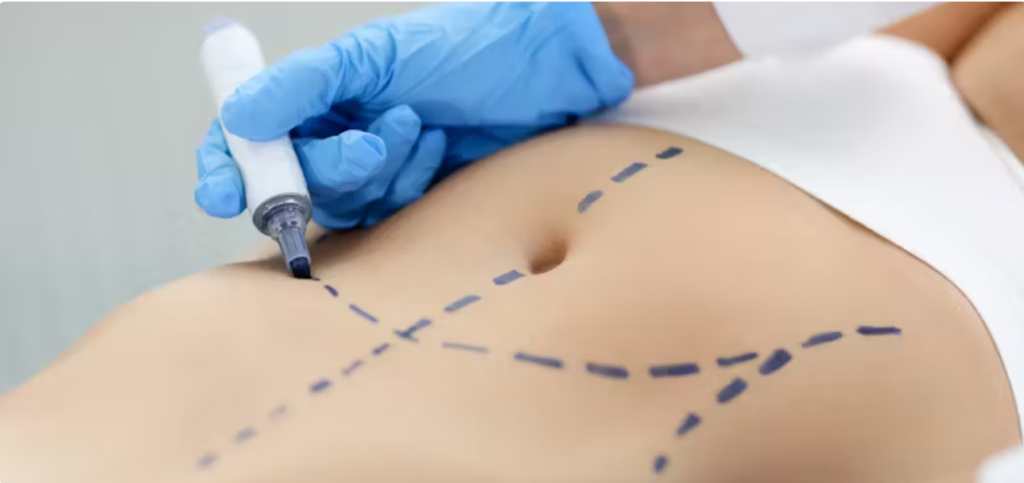
What determines the final shape is how the underlying tissue contracts and heals as that happens — which is largely down to individual anatomy.
The Common Belly Button Shapes
| Shape | What it looks like |
|---|---|
| Vertical | A narrow slit running up and down, often with a small hood of skin at the top. Among the most common. |
| Oval | Slightly taller than wide, set inward. Widely considered the most natural-looking shape. |
| Round | Circular and often shallower. More common in people carrying more abdominal fat. |
| T-shaped | A horizontal fold crossing a vertical opening, creating a small overhang. |
| Horizontal | Wider than it is tall, sometimes appearing as a narrow transverse slit. |
| Protruding (“outie”) | Tissue sits proud of the abdominal surface rather than recessed. |
Most people do not fit one category cleanly. A navel might be oval with a pronounced hood, or vertical at the top and rounder below. That mixture is normal.
Innie or Outie: What Actually Decides It
The large majority of people commonly cited as around 90% have a recessed navel.
A true outie present since infancy usually reflects how the tissue healed, and occasionally a small umbilical hernia that was present at birth. Many infant umbilical hernias close on their own during early childhood.
The important distinction: an outie you have always had is a variation. An outie that appears later in life is a different matter, and the section below explains why.
What Changes a Belly Button Over Time
Your navel is not fixed. Several things reshape it across a lifetime.
Pregnancy
- The abdominal wall stretches considerably, pulling the navel flatter and wider.
- It may pop outward temporarily in the third trimester as pressure increases.
- It often does not fully return to its previous shape, frequently settling wider or more elongated.
- Multiple pregnancies compound the effect.
Weight change
Significant weight gain deepens and stretches the navel. Significant loss can leave it looking elongated or hooded, because the surrounding skin has stretched and may not fully retract.
Envejecimiento
Skin loses elasticity over time, and the navel typically becomes slightly longer and less defined as the abdominal skin around it relaxes.
Cirugía
Abdominal surgery a tummy tuck in particular changes how the navel sits, because the skin around it is tightened and repositioned. That subject has its own guide: the belly button after a tummy tuck.
When a Change Means See a Doctor
This is the part of the article worth reading carefully.
A navel that develops a new bulge, becomes an outie in adulthood, or changes shape alongside discomfort may indicate an umbilical hernia a weakness in the abdominal wall allowing tissue to push through.
Signs worth having assessed:
- A bulge that appears or enlarges when you cough, strain, lift or stand.
- A navel that becomes an outie having always been recessed.
- Discomfort, aching or pressure around the navel.
- A lump that feels firm or that you can push back in.
Seek care promptly if a bulge becomes painful, firm, discoloured or cannot be pushed back, particularly with nausea or vomiting. That combination can indicate a trapped hernia, which is a medical emergency.
Umbilical hernias are common after pregnancy and after significant weight change. They do not resolve on their own in adults, though many are small and need only monitoring. [DR B TO CONFIRM: how he assesses and manages umbilical hernia found at consultation, and whether repair can be combined with abdominal contouring.]
Can You Change Your Belly Button’s Shape?
Surgically, yes. Whether you should is a separate question, and for most people the answer is no — a navel that is simply a different shape from someone else’s is not a problem to solve.
For patients genuinely bothered by a navel that has changed, two routes exist.
- Umbilicoplasty reshapes the navel itself without tightening the abdomen. It suits a navel that has become stretched or elongated where the surrounding skin is otherwise fine. [DR B TO CONFIRM: whether this is offered as a standalone procedure.]
- A tummy tuck addresses the navel as part of a larger operation, alongside loose abdominal skin and separated muscle. If those are your concerns, this is the operation that treats them.
Neither is a small decision, and neither is appropriate for someone whose only concern is that their navel looks different from a photograph they saw.
Belly Button Piercings
Not every navel shape holds a piercing well. A piercing needs a defined upper rim or hood of skin to pass through, which is why vertical and oval shapes generally suit them better than shallow round ones.
If you have a piercing and are planning abdominal surgery, raise it at consultation. Jewellery has to come out for surgery, and the tract sometimes closes during healing.
The Short Version
Belly button shape is mostly a matter of how you healed as a newborn, and the range of normal is wide. What matters clinically is not which shape you have, but whether it has changed and if it has, whether that change came from pregnancy, weight, ageing, or something that needs assessing.
Noticed a change in your navel? If there is a new bulge or discomfort, have it assessed. Dr. Baumholtz is board-certified in both Plastic Surgery and General Surgery, so hernia assessment is part of the conversation when it is relevant.
Book a consultation or call +1 210-880-3708.
Preguntas Frecuentes
What determines belly button shape?
Your navel is the scar left after the umbilical cord separates in infancy. Its final shape depends on how the underlying tissue contracted and healed, which is down to individual anatomy rather than how the cord was cut or clamped.
Does the doctor decide whether you get an innie or an outie?
No. This is a common myth. The cord is cut well away from the abdominal wall and the stump dries and falls off naturally. The resulting shape is determined by how the tissue heals, not by technique at delivery.
What is the most common belly button shape?
Recessed navels — “innies” — account for the large majority, commonly cited as around 90% of people. Among those, vertical and oval shapes are the most frequently seen, often with a small hood of skin at the upper edge.
Why did my belly button change after pregnancy?
Pregnancy stretches the abdominal wall and the skin, which flattens and widens the navel. It may protrude temporarily late in pregnancy. It often does not fully return to its previous shape afterwards, especially after more than one pregnancy.
When is a change in my belly button a problem?
A new bulge, becoming an outie in adulthood, or shape change with discomfort can indicate an umbilical hernia and should be assessed. Seek urgent care if a bulge becomes painful, firm, discoloured or cannot be pushed back in.
Can an umbilical hernia go away on its own?
Umbilical hernias present in infancy often close during early childhood. Those that develop in adulthood do not resolve on their own, though small ones may only need monitoring rather than repair. A doctor should assess which applies.
Can you change the shape of your belly button?
Surgically, yes. Umbilicoplasty reshapes the navel without tightening the abdomen, and a tummy tuck addresses it as part of a larger operation. Both are surgical decisions appropriate only for patients genuinely bothered by a change.
What is umbilicoplasty?
Umbilicoplasty is a procedure that reshapes the belly button itself without tightening the surrounding abdomen. It can address a navel stretched or elongated by pregnancy or weight change, but it does nothing for loose abdominal skin or separated muscles.
Which belly button shapes suit a piercing?
A piercing needs a defined upper rim or hood of skin to pass through, so vertical and oval shapes generally suit them better than shallow, round navels. A professional piercer will assess whether your anatomy is suitable.
About the author. Dr. Michael Baumholtz is a double board-certified plastic surgeon in San Antonio, Texas, certified in both Plastic Surgery and General Surgery. Read his full profile.