¿Cuál es la mejor edad para la cirugía Gynecomastia?
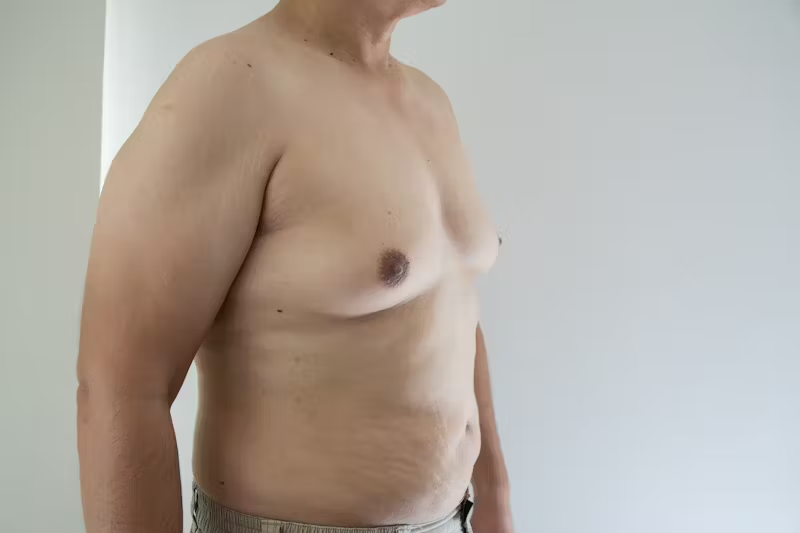
¿Cuál es la mejor edad para la cirugía Gynecomastia?
No hay una sola mejor edad para la cirugía ginecomastia. Los cirujanos tiempo la operación por la afección, no el calendario: tejido que ha estado estable por lo menos un año, un peso que se puede mantener, y una causa subyacente identificada o descartada. En cualquier caso, los datos nacionales sugieren que la mayoría de los hombres esperan más tiempo de lo que necesitan.
Escapadas clave
- La estabilidad importa más que la edad. Gynecomastia que no ha cambiado en un año es poco probable que se resuelva por sí mismo.
- La mayoría de los pacientes son adultos. Casi 9 de cada 10 procedimientos de ginecomastia en 2024 se realizaron en hombres de 20 años o más.
- Los hombres en sus años treinta son el grupo más grande, no adolescentes.
- No hay límite de edad superior. Calidad de la salud y de la piel, no edad, conforman el plan quirúrgico.
La mayoría de los pacientes Gynecomastia no son adolescentes
La suposición detrás de esta pregunta es generalmente que la cirugía ginecomastia es algo que los hombres jóvenes tienen. Las cifras nacionales dicen lo contrario.
La Sociedad Americana de Cirujanos Plásticos registró 26.430 procedimientos de ginecomastia en 2024. Así es como se desmoronaron por edad:
| Grupo de edad | Procedimientos (2024) | Compartir |
|---|---|---|
| 19 y menores | 2,942 | 11% |
| 20–29 | 7,417 | 28% |
| 30–39 | 7,554 | 29% |
| 40–54 | 5,572 | 21% |
| 55–69 | 2,426 | 9% |
| 70 y más | 519 | 2% |
Los hombres de treinta años son el grupo más grande. Los adolescentes representan aproximadamente un procedimiento en nueve. Casi un tercio de los pacientes tienen más de 40.
Muchos hombres de esas bandas medias han vivido con ginecomastia desde la adolescencia. No lo desarrollaron en 35 — decidieron lidiar con ello a los 35.
Lo que realmente buscan los cirujanos
Tres condiciones importan mucho más que tu edad, y los tres pueden ser evaluados en cualquier punto de la vida adulta.
El tejido ha dejado de cambiar
Gynecomastia que sigue apareciendo o ensanchándose sigue siendo activa. Operando durante el cambio activo invita un resultado que cambia después.
El tejido que ha estado presente y no ha cambiado durante más de un año se ha convertido generalmente en fibroso. En ese momento no se resolverá por sí solo, y la cirugía se convierte en la opción realista.
Tu peso es uno que puedes mantener
El pecho contiene tejido glandular y grasa. La cirugía elimina lo que hay en el día; no puede evitar que las células grasas restantes agranden más adelante.
Ganancia de peso significativa después de la cirugía puede hacer que el pecho se vea más lleno de nuevo. Eso no es recurrencia de la glándula — pero deshacer parte del resultado.
Se ha buscado una causa subyacente
Gynecomastia es un síntoma antes de que sea una preocupación cosmética. Varias cosas cambian el equilibrio hormonal que lo conduce:
- Medicamentos — incluyendo algunos antiandrógenos, medicamentos cardíacos y opioides
- esteroides anabólicos y ciertos suplementos
- Alcohol y algunas drogas recreativas
- Tiroides, hígado y condiciones renales
- Baja testosterona u otros problemas endocrinos
Un cambio nuevo, unilateral, doloroso o de rápido crecimiento debe evaluarse médicamente antes de discutir cualquier procedimiento cosmético. Nunca detenga un medicamento recetado por su cuenta — criarlo con el médico que lo prescribió.
Si estás en tus adolescentes
El cálculo es diferente antes de la edad adulta, y merece su propia respuesta.
La ginecomastia pubertad generalmente resuelve sin tratamiento dentro de seis meses a dos años, según Clínica Mayo. Los cirujanos generalmente observan durante al menos doce meses antes de considerar la cirugía, porque operar en algo que habría resuelto significa una operación innecesaria.
También es menos común que la mayoría de los artículos reclaman. Un estudio de 2024 de 596.184 niños de 12 a 15 años encontró ginecomastia en alrededor del 1.08% de ellos, y el 0,70% entre los niños con un IMC de 25 o menos. La edad máxima era de 13.
Si usted es un padre que pesa esto ahora, lo cubrimos correctamente aquí: adolescente gynecomastia — cirugía ahora o espera?
Si estás en tus 20 o 30 años
Aquí es donde están la mayoría de los pacientes, y el razonamiento suele ser directo.
By your twenties, gynecomastia that began in adolescence has had years to resolve. If it has not, it is fibrous tissue and it is not going to change on its own.
Two things tend to make this the practical window:
- Weight is more stable than it was through the late teens
- Skin quality is good, so the chest usually re-drapes well after the gland is removed
Good skin elasticity often means the gland can be removed without needing to remove skin as well — which keeps the scar smaller.
If You Are Over 40
Age is not a barrier. Two things do change, and both are about tissue rather than years.
Skin laxity. Skin that has lost elasticity may not retract fully once the tissue underneath is removed. Some patients need skin tightening alongside gland removal, which affects the incision and the scar.
New onset deserves investigation. Gynecomastia appearing for the first time later in life is more likely to have an identifiable cause. Mayo Clinic notes that between 24% and 65% of men aged 50 to 80 have some degree of gynecomastia, frequently linked to medications or medical conditions.
That is a reason to be examined first, not a reason to avoid surgery. Fitness for anesthesia, not age, is the question a surgeon asks.
The One Timing Mistake Worth Avoiding
Waiting indefinitely for something that has already stopped changing is the most common error we see.
Men routinely tell us they have waited five, ten or twenty years hoping it would resolve, or that losing weight would fix it. If the tissue is glandular, neither happens.
Chest training can make it more noticeable, not less. Building the pectoral muscle underneath pushes the glandular tissue forward.
The cost of waiting is not medical — gynecomastia itself is usually harmless. The cost is the years spent avoiding swimming, changing rooms and taking a shirt off.
How Dr. Baumholtz Approaches Timing
Every consultation starts with an examination to establish what the tissue actually is. Firm, rubbery tissue concentrated beneath the areola is glandular; soft, diffuse fullness is fat. The two need different treatment.
From there the discussion is about whether anything still needs investigating, whether your weight is where you can hold it, and what the realistic result looks like for your skin quality.
¿Considerando la cirugía ginecomastia en San Antonio? Dr. Michael Baumholtz is double board-certified in plastic surgery and general surgery, with more than two decades of experience in San Antonio. Schedule a consultation to find out what is actually causing the change and whether now is the right time.
Frequently Asked Questions About Gynecomastia Surgery and Age
What is the best age for gynecomastia surgery?
There is no single best age. Surgeons look for gynecomastia that has been stable for at least a year, a weight you have held steady, and an identified or excluded underlying cause. National figures show most patients are between 20 and 39, but the condition decides the timing, not a birthday.
Am I too old for gynecomastia surgery?
No. There is no upper age limit for gynecomastia surgery. What matters is general health and fitness for anesthesia rather than age itself. ASPS data records more than 2,900 gynecomastia procedures performed on men aged 55 and over in 2024, including patients in their seventies.
Is 30 too late to have gynecomastia surgery?
No. Men in their thirties are the single largest group having gynecomastia surgery. In 2024 the 30 to 39 age band accounted for 7,554 procedures, slightly more than any other age group. Many of these men have had the condition since adolescence and simply decided to address it.
Should a teenager wait for gynecomastia to go away?
Usually yes, at least initially. Pubertal gynecomastia often resolves on its own within six months to two years. Surgeons typically observe for at least twelve months before considering surgery, though persistent enlargement, pain or significant distress can change that assessment.
Does gynecomastia surgery work as well for older men?
Yes, though the surgical plan often differs. Older patients tend to have more skin laxity, so skin tightening may be needed alongside gland removal rather than excision alone. Skin quality, not age, is what changes the technique and the expected result.
Will gynecomastia come back if I have surgery young?
Glandular tissue that is properly removed does not grow back. Recurrence is uncommon and usually traced to incomplete excision, an untreated underlying cause such as anabolic steroid use, or weight gain adding chest fat around the treated area.
How do I know if my gynecomastia is permanent?
Duration is the strongest signal. Tissue that has been present and unchanged for more than one to two years has usually become fibrous and is unlikely to resolve without surgery. A physical examination distinguishes firm glandular tissue from soft fat.
What should I do before booking gynecomastia surgery?
Make sure an underlying cause has been looked for, review your medications with your physician, and reach a weight you can maintain. A new, one-sided, painful or rapidly growing change should always be evaluated medically before any cosmetic procedure is discussed.
La respuesta corta
The best age for gynecomastia surgery is whenever the tissue has stopped changing, your weight is stable, and an underlying cause has been ruled out or treated.
For most men that point arrives in their twenties. The data says most of them act on it in their thirties — and a significant number much later, with good results.
If it has been there for years and has not moved, waiting longer is unlikely to change anything except how long you live with it.
Orígenes
- American Society of Plastic Surgeons, 2024 Plastic Surgery Statistics Report
- Pubertal gynecomastia incidence among 530,000 boys: a cross-sectional population-based study, Frontiers in Pediatrics (2024)
- Mayo Clinic, Gynecomastia — Symptoms and Causes
This article is for general information and is not a substitute for a medical consultation. Last reviewed October 2026.