Gynecomastia Surgery Cost: Gyno Price in Texas
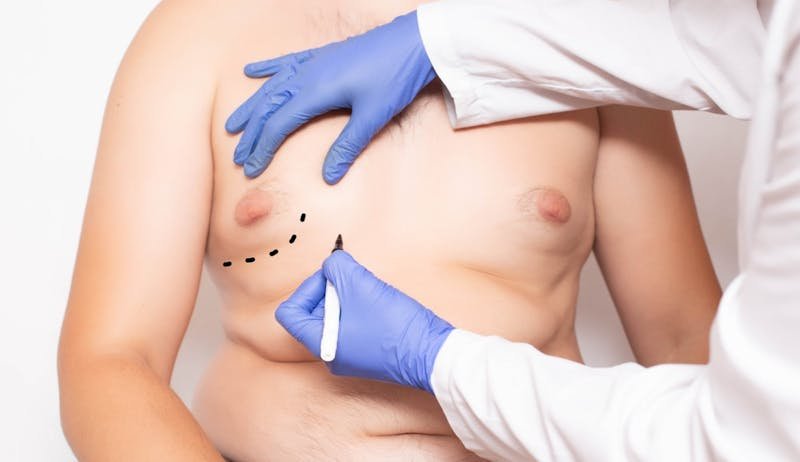
Gynecomastia Surgery Cost: Gyno Price in Texas
The American Society of Plastic Surgeons reports an average surgeon’s fee of $5,587 for gynecomastia surgery. That number is widely quoted and widely misunderstood: ASPS states plainly that it excludes anesthesia, facility costs and other related expenses. The figure you actually pay is higher, and how much higher depends on what your quote includes.
Key takeaways
- $5,587 is the surgeon’s fee alone, not the total.
- Seven things make up a real quote — ask which are included.
- Most insurance plans do not cover it, though reconstructive criteria exist.
- The cheapest quote often omits the most, or omits removing the gland.
What the National Average Actually Covers
ASPS publishes average fees for cosmetic procedures, and for gynecomastia surgery — also called male breast reduction — that average is $5,587.
The organization is explicit that this figure “does not include anesthesia, operating room facilities or other related expenses.”
That caveat is the single most important sentence on any gynecomastia cost page, and most pages quoting the $5,587 figure leave it out.
What a Complete Quote Includes
ASPS lists seven components that make up the total cost:
| Component | What it covers |
|---|---|
| Surgeon’s fee | The operation and the surgeon’s time |
| Anesthesia | The anesthesia provider, billed by time |
| Facility cost | Operating room, staff, equipment, recovery area |
| Medical tests | Any pre-operative bloodwork or investigations |
| Compression garment | Worn for several weeks after surgery |
| Prescriptions | Pain relief and any other post-operative medication |
| Follow-up visits | Post-operative appointments |
Ask any practice which of these their quoted figure covers. It is a reasonable question and the answer makes quotes comparable for the first time.
What Moves the Price
Gland, fat, or both
This is the largest variable, and it is settled by examination rather than by choice.
A predominantly fatty chest may be treatable with liposuction alone, which takes less operating time and costs less. Glandular tissue has to be excised, which takes longer. Most chests need both.
One side or two
Gynecomastia is often asymmetric, and occasionally only one side needs treatment. Treating both takes longer than treating one.
How much tissue, and whether skin must be removed
More substantial cases take longer. Where significant skin excess is present — often after major weight loss — skin removal adds both time and complexity, and changes the scar.
Operating time and facility
Anesthesia is billed by time, so anything that lengthens the operation raises that component. An accredited surgical facility carries a different fee structure than a hospital operating room.
Does Insurance Cover Gynecomastia Surgery?
Usually not. ASPS states that most health insurance plans do not cover male breast reduction, or complications arising from it.
There is a narrower route worth knowing about. Some carriers will consider cases that meet reconstructive rather than cosmetic criteria, and ASPS publishes a position paper on those criteria that your physician can request and submit to an insurer.
Whether that applies to you depends on your plan, your documentation and your carrier. What to do:
- Read your own policy, specifically the exclusions for cosmetic surgery
- Ask the office to review it with you before you assume either way
- Gather documentation of duration, symptoms and any previous medical evaluation
Plan on paying out of pocket, and treat any coverage as a bonus rather than the basis of your decision.
What You Will Pay Here
Because the plan depends on what your examination shows — gland versus fat, one side or both, whether skin needs removing — a figure is given at consultation once those are established.
What you receive is an itemized quote covering all seven components above, so you can see exactly what is and is not included and compare it fairly against anything else you have been given.
If budget shapes what you are considering, raise it early. It is a normal part of the conversation and it affects the discussion about approach.
See financing and pricing options.
Why the Cheapest Quote Often Is Not
Two things to check before treating a lower number as a saving.
Check what it excludes. A surgeon’s fee quoted alone against a complete package is not a comparison. Anesthesia and facility together are a substantial share of the total.
Check what operation it buys. A liposuction-only approach costs less and is appropriate for a predominantly fatty chest. If you have glandular tissue and it is not excised, you will still have a firm disc under the areola afterwards — and the revision to correct that is a second operation with a second set of fees.
Verify board certification in plastic surgery regardless of price, and ask about the revision policy before booking.
Considering gynecomastia surgery in San Antonio? Dr. Michael Baumholtz is double board-certified in plastic surgery and general surgery, with more than two decades of experience in San Antonio. A consultation establishes what your chest actually needs and produces an itemized quote.
About gynecomastia surgery · Virtual consultation · Request an appointment
Frequently Asked Questions
How much does gynecomastia surgery cost?
The American Society of Plastic Surgeons reports an average surgeon’s fee of $5,587 for gynecomastia surgery. That figure explicitly excludes anesthesia, operating room or facility costs and other related expenses, so a complete quote is higher.
What is included in a gynecomastia surgery quote?
A complete quote covers the surgeon’s fee, anesthesia, the hospital or surgical facility cost, any medical tests, post-surgery compression garments, prescription medications and follow-up visits. Ask which of these a quoted figure includes before comparing practices.
Does insurance cover gynecomastia surgery?
Most health insurance plans do not cover male breast reduction or complications arising from it. Some carriers consider cases meeting reconstructive criteria, and ASPS publishes a position paper your physician can submit. Check your own policy and ask the office to review it with you.
What makes gynecomastia surgery cost more or less?
The main factors are whether the tissue is glandular, fatty or both, whether one side or both are treated, how much tissue needs removing, whether excess skin must also be excised, and the resulting operating time. Surgeon experience and the facility also affect the total.
Is liposuction-only gynecomastia surgery cheaper?
Usually, because it takes less operating time. It is only appropriate when the chest is predominantly fatty. If glandular tissue is present, liposuction alone will not remove it, and a cheaper operation that leaves the gland behind is not a saving.
Can gynecomastia surgery be financed?
Yes. Most practices work with medical financing providers offering monthly payment plans, and many have promotional interest-free periods for qualifying applicants. Check what the interest rate becomes once any promotional period ends.
Why are some gynecomastia quotes so much lower?
Usually because they cover less. A quote listing only the surgeon’s fee is not comparable with one covering anesthesia, facility and follow-up. Lower quotes may also reflect a liposuction-only approach that does not address glandular tissue.
Does revision gynecomastia surgery cost extra?
Generally yes. Revision is a second operation with its own surgeon, anesthesia and facility fees, and revision work is often more technically demanding than the original. Ask about the revision policy before booking rather than afterwards.
The Short Answer
Budget above the $5,587 average, because that figure is the surgeon’s fee and nothing else.
Ask every practice for an itemized quote covering all seven components, and compare like with like.
And check what operation the quote actually buys. A cheaper procedure that leaves glandular tissue behind is the most expensive version of this surgery.
Planning ahead? Gynecomastia recovery, week by week.
Source
The average quoted is a national surgeon’s fee, not a quote. This article is for general information and is not a substitute for a consultation. Last reviewed October 2026.