Pointy or Tube-Shaped Breasts? It Could Be Tuberous Breast Deformity
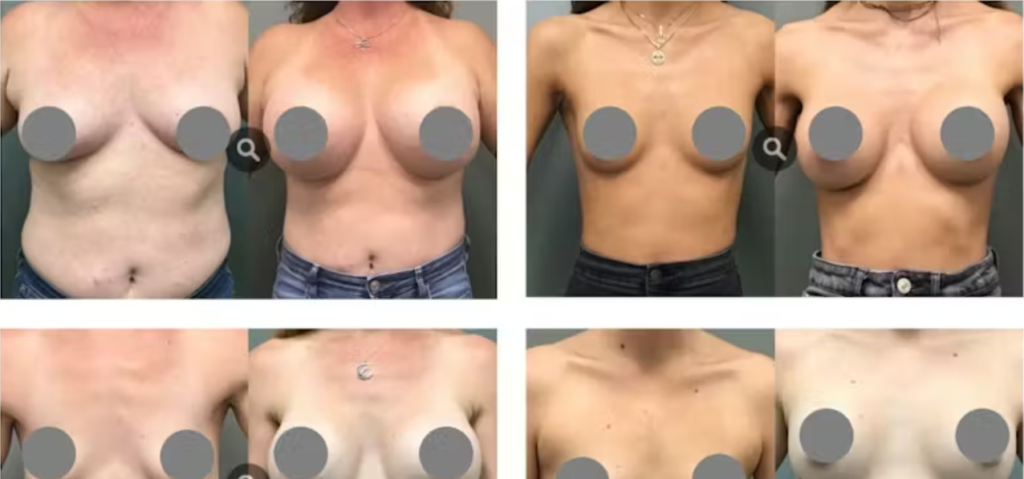
Pointy or Tube-Shaped Breasts? It Could Be Tuberous Breast Deformity
There is a name for it. Tuberous breasts are a recognized developmental variation where the base of the breast is underdeveloped and breast tissue pushes forward into the areola, making it look full or domed. It is not a disease, and standard augmentation alone often disappoints.
Key takeaways
- It has a name and a classification. You are not an unexplained case.
- The base is the problem, not the areola — the areola is being pushed.
- Implants alone often disappoint because the restriction stays in place.
- Three types, and having a different one on each side is common.
First, the part that matters most
Most women who have this have never heard the term. They have spent years assuming their breasts are simply unusual, that nobody else looks like this, and that there is nothing to be done.
None of that is true. Tuberous breasts make up roughly ten percent of all breast malformations. There is a published classification, a known anatomical cause, and established surgical correction. Whatever you decide to do about it, you are looking at a described condition rather than a mystery.
What Is Actually Different
The visible features all trace back to one underlying issue: the base of the breast — the footprint where it meets the chest wall — did not develop to full width, particularly at the lower pole.
Several things follow from that.
| What you see | Why |
|---|---|
| A pointed or tubular shape | With a narrow base, the breast projects forward instead of spreading across the chest |
| A full, domed or puffy areola | Glandular tissue herniates forward through the areolar complex, creating a double contour |
| An areola that looks too big | It is enlarged relative to breast volume, and is being stretched by the tissue behind it |
| A high breast crease | The fold beneath the breast sits higher than usual |
| A wide gap between the breasts | Seen particularly where the base is narrowed in all directions |
| Noticeable asymmetry | Common — the two sides are often affected to different degrees |
Underneath all of it is abnormal superficial fascia, which forms adhesions between the skin and the deeper layers and physically restricts the base from widening. That detail matters enormously for treatment, as the next section explains.
The Three Types
The commonly used classification sorts tuberous breasts into three types, and the type tells you a good deal about what correction would involve.
Type I — about 56% of cases
Underdevelopment of the lower inner quadrant only. The areola is displaced downward and inward. The breast is usually of normal volume, so correction here is more about shape than size.
Type II — about 26% of cases
Both lower segments are deficient, with the areola displaced downward. Around 74% of type II breasts have insufficient volume and need an implant as part of correction.
Type III — about 18% of cases
Both upper and lower segments are involved. The base is narrowed in all directions, giving a distinctly tubercle-like shape with a wide gap between the breasts. All type III breasts have insufficient volume and need an implant.
Different types on each side is normal. If one breast looks noticeably different from the other, that is characteristic of the condition rather than a sign that something else is going on.
Why Implants Alone Often Disappoint
This is the most useful thing on this page if you are considering surgery, and it is where tuberous breasts differ fundamentally from a straightforward augmentation.
The restriction has to be released
The lower segment of a tuberous breast is inelastic, held in place by tight fascial adhesions. Put an implant behind it without dealing with those adhesions and the lower breast stays under-filled — the implant fills what it can and the constriction holds the rest.
Worse, the pressure of the implant pushing against that inelastic tissue can force the areola forward again, recreating the protrusion you were trying to correct.
So a surgeon treating this as “a small breast that needs an implant” is treating the wrong problem. The volume deficit is real in types II and III, but the restriction is what gives the breast its shape, and volume alone does not undo it.
This is the single most important question to establish at a consultation: does the surgeon recognize this as tuberous, and what are they planning to do about the constriction specifically?
Double Bubble: The Complication to Understand
Correcting a tuberous breast usually involves lowering the breast crease, and that creates a specific risk worth knowing by name.
A double bubble is a visible second crease running across the breast after surgery. It comes in two forms:
- Immediate. Caused by a mismatch in skin thickness between the original breast skin and the chest skin recruited when the crease is lowered.
- Later, sometimes called waterfall deformity. Caused by skin relaxing and breast tissue descending over the implant with time.
A pinch test of the breast and chest skin before surgery can help predict the risk. If a surgeon has not mentioned double bubble when discussing tuberous correction with you, it is worth raising.
How Correction Works
One published technique approaches it this way:
- An incision at the upper edge of the areola.
- Dividing the deep surface of the restrictive fascial layer along a newly positioned breast crease — this is the step that releases the constriction.
- Preserving the lower segment glandular tissue rather than removing it, so there is something to fill the newly released lower breast.
- Placing the implant above or below the chest muscle, chosen by a pinch test — above or below two centimeters of tissue cover.
Other approaches exist, including staged operations and tissue expansion for more severe cases. Techniques using an incision at the lower areolar edge have been described as sometimes providing insufficient tissue to fill the lower breast.
What matters is less which specific technique and more that the plan addresses the restriction, the volume and the areola rather than only one of the three.
What the Published Results Show
One series reported on fourteen tuberous breasts in nine women, average age twenty-two, followed for an average of three years.
The authors reported no early or late complications, no tissue loss, no double bubble, and well-shaped lower breasts, with satisfaction described as high.
Read that with the sample size firmly in mind. Nine women is a very small series. Zero complications in nine patients is not evidence that a technique is complication-free — with numbers that small, zero is a result you would often get by chance even from a procedure that does carry real risk. It was also a single center with no comparison group, and satisfaction was described rather than measured with a validated instrument.
Encouraging, in other words, and nowhere near conclusive. The practical version: ask any surgeon how many tuberous corrections they have personally performed, and ask to see their own results.
If You Are Still Developing
Tuberous breasts usually become apparent as the breasts develop, which means many people first notice it as teenagers.
Surgical planning should wait until breast development is complete. Operating on a breast that is still changing risks a result that no longer fits you a few years later. If you are under eighteen, this is a conversation to have with a parent or guardian and a physician, and there is no reason to hurry it.
Knowing what the condition is called, though, is useful at any age — and for a lot of people, that is the part that actually helps. More on breast development and when it finishes: when do breasts stop growing.
What to Ask at a Consultation
Useful questions
- Do you think I have tuberous breasts, and which type on each side?
- What specifically will you do about the constriction? Not just the volume.
- Where will my breast crease end up, and what is my double bubble risk?
- Do I need an implant, or is this mainly a shape correction?
- What will happen to my areola?
- How many tuberous corrections have you done?
- Would you do this in one operation or two, and why?
- How different will my two sides look afterward?
If any of this sounds like your breasts, the useful next step is simply finding out. Identifying which type you have, on each side, is what turns a vague dissatisfaction into a specific and answerable question. Dr. Michael Baumholtz is double board-certified in plastic surgery and general surgery, with more than two decades of experience in San Antonio.
Frequently Asked Questions
Why do my breasts look pointy or tube-shaped?
It may be tuberous breasts, a recognized developmental variation in which the base of the breast is underdeveloped, particularly at the lower pole. Because the base is narrow, the breast projects forward rather than spreading across the chest, which produces a pointed or tubular shape rather than a rounded one.
What are tuberous breasts?
A developmental difference in how the breast base forms. Abnormal fascia creates adhesions that restrict the base from widening, the crease beneath the breast often sits higher than usual, and breast tissue herniates forward into the areola. They account for roughly ten percent of all breast malformations.
Why does my areola look puffy or domed?
Because glandular tissue is pushing forward into it. In tuberous breasts the tissue herniates through the areolar complex, which creates a double-contour appearance and makes the areola look enlarged relative to the size of the breast. The areola is not the problem itself; it is being stretched by what sits behind it.
Are tuberous breasts dangerous?
No. It is a variation in how the breast developed rather than a disease, and it does not threaten your health. The reasons people seek correction are appearance and the distress that can come with it, not medical risk. That said, any new lump or change should be assessed by a doctor as it would be for anyone.
What are the types of tuberous breasts?
Three, in the commonly used classification. Type I, about 56 percent of cases, involves the lower inner quadrant only, with the breast usually of normal volume. Type II, about 26 percent, involves both lower segments. Type III, about 18 percent, involves upper and lower segments with the base narrowed in all directions. Having different types on each side is common.
Will breast implants alone fix tuberous breasts?
Often not satisfactorily. The lower segment of a tuberous breast is inelastic and held by tight fascial adhesions, so an implant placed without releasing those restrictions tends to leave the lower breast under-filled. The pressure of the implant against inelastic tissue can also push the areola forward again, recreating the protrusion.
What is a double bubble deformity?
A visible second crease across the breast after augmentation, and the main complication to understand with this condition. The immediate form arises from a mismatch in skin thickness when the breast crease is lowered. A later form, sometimes called waterfall deformity, happens when skin relaxes and breast tissue descends over the implant.
How are tuberous breasts corrected?
By addressing the restriction rather than only adding volume. The technique described in one published series uses an incision at the upper edge of the areola, divides the restrictive fascial layer along a newly positioned breast crease, preserves the lower segment tissue, and places an implant above or below the muscle depending on how much tissue covers it.
Do I need an implant to correct tuberous breasts?
It depends on the type. In type I the breast is usually of normal volume, so correction may focus on shape rather than size. In type II, around 74 percent have insufficient volume and need an implant, and in type III all do. Which applies to you is established by examination.
Can I breastfeed with tuberous breasts?
Many women can, though some have reduced glandular tissue and find milk supply is affected. This varies considerably between individuals and is not something a web page can predict for you. If you are planning a family, raise it with your obstetric provider or a lactation consultant, and mention it to your surgeon before any procedure.
Should I have surgery while I am still a teenager?
Breast development should be complete before surgical planning, because operating on a breast that is still changing risks a result that stops matching you. For anyone under eighteen this is a conversation involving a parent or guardian and a physician, and there is no reason to rush it. Learning what the condition is called is useful at any age.
How well does correction work?
One published series of fourteen tuberous breasts in nine women reported no early or late complications and well-shaped lower breasts at an average of three years follow-up. Nine patients is a very small sample, so that result is encouraging rather than conclusive. Ask any surgeon how many of these they have performed and what their own results look like.
The Short Answer
Pointy or tube-shaped breasts with a full, domed areola often mean tuberous breasts — a developmental variation where the breast base never widened properly and tissue herniates forward into the areola.
It is not a disease, it is described and classified, and roughly one in ten breast malformations are this.
The thing to know before surgery is that implants alone frequently disappoint, because the restriction that shaped the breast is still there afterward. Releasing it is the operation. Adding volume is only part of it.
Source
This article is general information and does not replace assessment by a qualified surgeon. Outcome figures come from a series of nine patients and should be read as indicative rather than as expected rates. Questions about breastfeeding should be directed to your own obstetric provider. Last reviewed October 2026.