Chest Liposuction or Gland Removal for Gynecomastia — or Both?
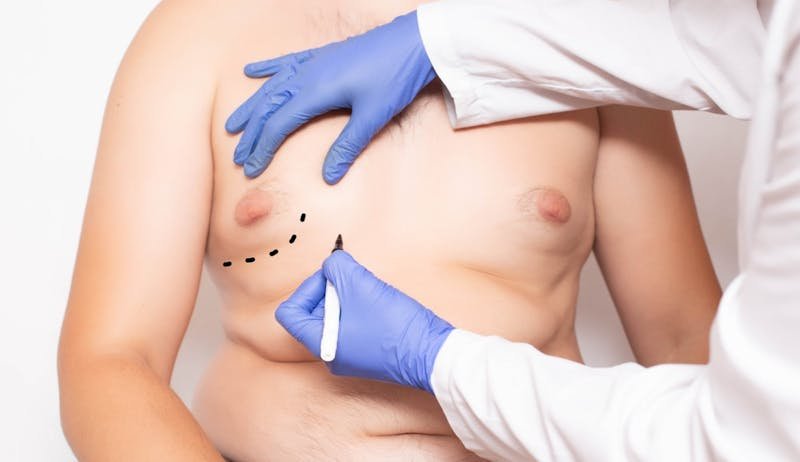
Chest Liposuction or Gland Removal for Gynecomastia — or Both?
Most men need both. Liposuction removes fat and can be enough for lower-grade cases, but glandular tissue sits mainly beneath the areola and is dense enough that it usually has to be cut out rather than suctioned. Which you need depends on what your tissue actually is.
Key takeaways
- Usually both — liposuction for fat, excision for gland.
- Liposuction alone can work in lower-grade cases. Grade decides it.
- About 2 cm is left under the areola on purpose, to avoid a dished result.
- Skin excess may need addressing too, or you risk a second operation.
Two Tissues, Two Tools
Gynecomastia is rarely one thing, which is why the operation is rarely one procedure.
Fat is soft, spread across the chest, and aspirates readily through a cannula. Liposuction handles it well.
Glandular tissue is different in two ways that both matter surgically. It is considerably denser and more fibrous than fat, so it resists being suctioned. And it is concentrated — sitting mainly directly beneath the areola rather than distributed across the chest.
So the tools are not interchangeable. The question is not which one is better but which tissues you actually have, and in what proportion.
When Liposuction Alone Is Enough
Here the common internet answer is wrong, and worth correcting.
Most pages state flatly that liposuction cannot touch glandular tissue. The published position is more precise: liposuction alone is effective in treating fibrous low-grade gynecomastia.
What limits it is grade rather than tissue type outright. In higher-grade cases, liposuction tends to leave residual palpable glandular tissue behind. And where there is significant skin excess, liposuction and gland removal performed without skin excision have been described as leaving considerable residual redundancy — needing a second operation to address the skin.
And if your fullness is purely fatty — pseudogynecomastia rather than true gynecomastia — liposuction addresses it directly and gland removal is unnecessary. Establishing which you have is the first step, because the two respond to completely different things.
How the Combined Operation Works
The technique commonly described pairs liposuction with gland excision through a very small opening.
- Liposuction first, in two planes. Both deep and superficial to the breast tissue, with particular care near the nipple and areola to preserve the fine blood supply in the skin there.
- Assess what remains. After the fat is removed, the glandular tissue that is left becomes clear — and it sits mainly below the areola.
- Excise the gland through a snip incision. A small opening at roughly the 5 to 7 o’clock position of the areola, through which the remaining gland is drawn out and removed. This is the “pull-through” part.
- Leave a deliberate margin. Not all of it comes out — see below, because this is the step that determines whether the result looks right.
- Close. With skin excess, tissue between concentric rings around the areola is de-epithelialized and closed with a purse-string stitch before the skin is sutured.
The 2 cm rule
In the published technique, about two centimeters of tissue is left under the areola on purpose — specifically to avoid a saucer-shaped deformity, and to protect the blood supply to the areola.
This is the single most useful thing to understand about this operation. The risk worth worrying about is not that too little tissue comes out. It is that too much does.
Why Over-Resection Is the Real Risk
Removing every last scrap of gland from under the areola sounds thorough. It produces a dished, sunken contour that is considerably harder to correct than the original fullness was.
Take too little and the problem persists. Take too much and you have created a different and more difficult problem. The judgment about where that line sits is the part of this operation that experience buys, and it is a fair thing to ask a surgeon about directly.
Where Skin Comes Into It
This is the factor most often underestimated, and it determines whether you need one operation or two.
Surgeons commonly grade gynecomastia using Simon’s classification. Grade IIB is moderate enlargement with excess skin; grade III is extensive enlargement with considerable excess skin.
In those grades, removing fat and gland without addressing the skin can leave redundancy behind — skin that was stretched and has nothing left to fill it. The published observation is that this needs a second surgery for skin excision.
Which means the honest version of “do I need skin removed” is usually answered at examination rather than negotiated afterward.
What One Series Reported
A prospective series of twenty men, aged 18 to 42, using liposuction with pull-through gland excision:
Outcomes and complications (n = 20)
- Symmetry: 90%
- Good chest contour: 90%
- Residual sagging: 5%
- Unaesthetic scar (wide or thickened): 15%, managed with topical silicone
- Asymmetry: 10%
- Hematoma: 5% · Seroma: 5% — both managed with compression and needle aspiration
- Partial areolar blood supply compromise: 5%, managed with dressings
- Saucer deformity, complete areolar loss, infection: 0%
Read those numbers with the sample size in mind. Twenty patients at a single center is a small series, not large-scale evidence. The figures are encouraging and worth knowing, and they are not precise enough to quote as expected rates. Any page presenting percentages from a study this size as settled fact is overselling them.
Worth noting too: this study had no liposuction-alone comparison group, so it tells you what this technique achieved — not that it beats liposuction by itself.
How Your Surgeon Decides
What the decision actually rests on
- Gland, fat, or both — and in what proportion.
- Your grade, which drives whether liposuction alone has a realistic chance.
- How much skin excess you have, and whether it needs addressing in the same operation.
- How much tissue to leave under the areola, judged against your anatomy.
- Whether anything is still driving it — a medication or other cause worth identifying first.
None of these are answerable from a photograph, which is why this is an examination question.
What to Ask
Useful consultation questions
- Is mine gland, fat, or both?
- Are you planning liposuction alone, excision alone, or both?
- How much tissue will you leave under my areola, and why that amount?
- Do I have enough skin excess that it needs removing too?
- Where exactly will the incision be, and how long?
- What grade would you put me at?
- How many of these have you performed?
Whether you need liposuction, excision, or both comes down to what your tissue actually is — and that is settled by examination rather than online. Dr. Michael Baumholtz is double board-certified in plastic surgery and general surgery, with more than two decades of experience in San Antonio.
About gynecomastia surgery · Virtual consultation · Request an appointment
Frequently Asked Questions
Do I need liposuction or gland removal for gynecomastia?
Most men need both. Liposuction addresses the fatty component, and glandular tissue usually has to be excised because it is denser and more fibrous than fat. The exception is lower-grade gynecomastia, where published work indicates liposuction alone can be effective. Which applies to you depends on examination.
Can liposuction alone remove gynecomastia?
Sometimes. One published series states that liposuction alone is effective in treating fibrous low-grade gynecomastia. For higher grades it tends to leave residual palpable glandular tissue behind, and where there is significant skin excess it can leave redundancy that needs a second operation. Grade is what decides it.
Why does glandular tissue have to be cut out?
Because it is considerably denser and more fibrous than fat, so it does not aspirate through a cannula the way fat does. It also sits mainly directly beneath the areola rather than being spread across the chest. Removing it means excising it through a small incision rather than suctioning it.
What is the pull-through technique?
Liposuction is performed first, in planes both deep and superficial to the breast tissue, taking care near the nipple and areola to preserve its blood supply. The glandular tissue that remains, which sits mainly under the areola, is then drawn out through a small snip incision and excised. It allows gland removal through a very small opening.
How is a sunken or dished areola avoided?
By deliberately leaving tissue behind. In the published technique, about two centimeters of tissue is left under the areola specifically to avoid a saucer-shaped deformity or compromising the blood supply to the areola. Judging how much to leave is the part of this operation where experience matters most.
What happens if too much tissue is removed?
The area under the areola can end up dished or sunken, which is harder to correct than the original fullness was. Removing too little leaves the problem; removing too much creates a different one. This is why a conservative, well-judged resection matters more here than an aggressive one.
Will I need skin removed as well?
It depends on how much skin excess you have. Published work notes that liposuction and gland removal without skin excision can leave considerable residual skin redundancy in higher-grade cases, requiring a second operation for skin excision. Where significant excess exists, addressing it in the first operation avoids that.
How do surgeons grade gynecomastia?
Commonly using Simon’s classification. Grade IIB describes moderate enlargement with excess skin, and grade III extensive enlargement with considerable excess skin. The grade guides whether liposuction alone is likely to suffice, whether gland excision is needed, and whether skin removal should be part of the same operation.
What results does the combined operation produce?
In one prospective series of twenty patients using liposuction with pull-through gland excision, symmetry and good chest contour were each reported in ninety percent, with residual sagging in five percent. These are encouraging figures from a small single-center series rather than large-scale evidence, so treat them as indicative rather than definitive.
What are the complications of gynecomastia surgery?
In the same twenty-patient series, the authors reported no serious complications: an unaesthetic scar in fifteen percent, asymmetry in ten percent, and hematoma, seroma and partial areolar blood supply compromise each in five percent. No saucer deformity or infection occurred. Again, twenty patients is a small sample.
Will liposuction help if my chest is just fatty?
Yes. Where the fullness is genuinely fat rather than gland, which is called pseudogynecomastia, liposuction addresses it directly and gland removal is unnecessary. Establishing which you have is the first step, because the two respond to completely different treatments.
The Short Answer
Liposuction takes fat. Gland is denser, sits under the areola, and usually has to be excised. Most men need both.
Liposuction alone can be enough in lower-grade cases, which is more nuanced than the usual claim that it never works on gland. And if there is real skin excess, that may need addressing in the same operation rather than a second one.
The thing to get right is how much tissue stays. About two centimeters under the areola, deliberately left, is what separates a flat chest from a dished one.
Related: how to get rid of puffy nipples · what to expect after gynecomastia surgery
Source
This article is general information and does not replace assessment by a qualified surgeon. Figures quoted come from a single series of twenty patients and should be read as indicative rather than as expected rates. Last reviewed October 2026.