

Bodyshaping Surgery After Massive Weight Loss San Antonio
What It Can Improve, What It Cannot, And How A Staged Plan Works In San Antonio, Texas
Losing a large amount of weight is a major accomplishment. For many women, it takes years of work, discipline, and life change. The scale may finally feel honest. Lab work may improve. Energy may improve. Health may improve.
And still, the mirror can feel complicated.
Loose skin can hang, pull, rub, and fold in ways that affect daily life. Waistbands roll. Bras shift. Skin stays moist in folds and becomes hard to keep dry. Exercise can feel awkward because tissue moves in ways that no longer match the body underneath. Many women feel proud of their weight loss and frustrated at the same time. Both feelings can be true.
That is where bodyshaping surgery comes in.
Bodyshaping after massive weight loss is not about chasing perfection. It is about reducing heavy skin folds, improving proportion, and helping the body feel more stable in motion. It is also about making clothes fit better, reducing irritation, and treating the areas that still feel unfinished after the hard work of losing weight. These practical problems are common after major weight loss, and body contouring surgery is often sought because of hygiene concerns, skin irritation, mobility limits, and dissatisfaction with loose skin rather than the number on the scale alone. (PubMed)
Dr. Michael Baumholtz is a dual board-certified Plastic Surgeon and General Surgeon in San Antonio, Texas. His approach is practical: define the real problem, explain what surgery can and cannot change, and build a safe plan that fits anatomy, recovery logistics, and long-term tissue behavior.
What “Bodyshaping” Means After Massive Weight Loss
Bodyshaping after massive weight loss is not one operation. It is a plan.
That plan may include:
- tummy tuck surgery
- fleur-de-lis tummy tuck surgery
- Body Lift surgery
- breast lift or breast reshaping
- arm lift surgery
- thigh lift surgery
- upper back or bra-line contouring
- selected liposuction as a supporting tool
Most massive weight loss patients do not have one isolated area of skin excess. They usually have several. The abdomen may hang. The waistline may wrap into the flanks and lower back. The breasts may feel deflated and low. The arms may swing. The thighs may rub. That is why post-weight-loss body contouring is often performed in stages, and why planning must be individualized. Reviews and guidelines on post-bariatric contouring consistently emphasize that these patients have region-specific deformities, unique nutrition and healing concerns, and often need a staged strategy rather than a one-size-fits-all operation. (PubMed)
What Bodyshaping Can Realistically Improve
Bodyshaping surgery can:
- remove hanging skin folds
- improve waistline and clothing fit
- reduce skin rubbing and moisture trapping
- improve contour transitions between body regions
- make the body feel less heavy and less mobile during walking and exercise
Body contouring after bariatric surgery has been associated with better quality of life, better satisfaction with appearance, and fewer ongoing medical and psychosocial concerns related to loose skin in patients who undergo surgery compared with similar patients who do not. (PubMed)
What Bodyshaping Cannot Promise
Bodyshaping surgery does not:
- stop aging
- guarantee symmetry
- erase all stretch marks
- replace stable habits
- protect results from future pregnancy or future weight change
- create meaningful long-term weight loss on the scale
This is shape surgery, not weight-loss surgery.
Ready for Surgery? Take Dr Baumholtz Surgery Quiz
https://web.archive.org/web/20260521005819if_/https://6j6uu9ie1lr.typeform.com/to/wxpD9g2K
Why Loose Skin Happens Even After “Successful” Weight Loss
Skin Does Not Always “Bounce Back”
Skin stretches as body size increases. Whether it tightens well after weight loss depends on elasticity and collagen support.
- Elasticity is the skin’s ability to stretch and then recoil.
- Collagen is the structural protein that acts like internal scaffolding.
When skin is stretched for a long time, especially to a high degree, that support can weaken. Age, genetics, pregnancy history, sun exposure, and nicotine exposure all influence how well skin recovers. Reviews of post-bariatric contouring note that prolonged stretch, nutritional issues, smoking, and tissue-quality changes after weight loss all affect surgical planning and healing. (PubMed)
The Difference Between a Fat Problem And a Skin Problem
Many patients still have some fat after weight loss. But loose skin and excess fat are not the same issue.
- Subcutaneous fat is the fat under the skin. Liposuction can treat this in selected areas.
- Visceral fat is fat around the organs. Surgery like liposuction or tummy tuck does not remove visceral fat.
Most massive weight loss patients have a skin-envelope problem first. The frame got smaller, but the skin did not shrink enough to match it. In that situation, skin excision and redraping are the main tools.
The Anatomy That Matters Most
Bodyshaping results depend on understanding how different tissue layers behave.
Skin
After massive weight loss, skin is often thin, stretched, and less elastic. Stretch marks are common. Stretch marks are internal scar-like changes in the skin support layer. They are a sign of tissue stretch, not a sign of poor effort.
Fat
Fat may remain unevenly distributed. Some areas stay full, like the flanks or upper back. Other areas become deflated, like the upper breast.
Fascia
Fascia is a strong connective layer under the fat that gives the body internal support.
In the abdomen, the key fascia layer is the rectus sheath, which covers the rectus muscles.
Muscle
Most bodyshaping surgery does not cut muscle. When patients talk about “muscle tightening,” what is usually repaired is the fascia, not the muscle itself.
What is Diastasis Recti?
Diastasis recti means the two rectus muscles have separated because the connective tissue between them stretched. It is a fascia problem, not a muscle tear. If it is clinically relevant, it can be repaired with plication, meaning the fascia is stitched to reinforce the midline and improve abdominal support.
Size, Position, And Contour Are Different Problems
One of the biggest planning mistakes is treating every concern like it is the same concern.
Size
How much loose skin and residual fat is present.
Position
Where the tissue sits. After weight loss, tissue often drops.
Contour
How body regions transition into one another. Even when tissue is reduced, the outline can still look irregular.
This matters because:
- liposuction treats volume
- skin excision treats laxity
- lifting procedures treat position
Massive weight loss patients often need some combination of all three, but not always in one stage.
The Most Common Body Areas Treated After Massive Weight Loss
Abdomen and Waistline
A hanging lower abdominal fold can rub, trap moisture, and make clothes hard to wear. This is one of the most common first targets because it affects comfort every day.
Breasts and Bra Line
After weight loss, the breasts often look deflated and low. The side chest and bra-line region may also bunch under clothing.
Arms
Arm skin may swing with walking and make sleeves fit unpredictably.
Thighs
Inner thigh rubbing is common. Loose inner thigh skin can catch and pull during motion.
Back and Buttocks
Upper back rolls may show through clothing. The buttocks may feel like they have “dropped,” which is often more of a position problem than a volume problem.
These are classic post-bariatric deformity patterns described in body contouring reviews and long-standing plastic surgery literature. (PubMed)
The Most Common Bodyshaping Procedures After Massive Weight Loss
Tummy Tuck (Abdominoplasty)
A tummy tuck removes excess lower abdominal skin and may tighten the abdominal wall when needed. It is one of the most common starting points because the lower abdominal fold causes major daily limitation.
In a standard tummy tuck:
- excess lower abdominal skin is removed
- the abdominal skin is tightened
- the belly button is usually preserved and brought through a new opening
- the fascia can be tightened if needed
A tummy tuck is strong at treating lower abdominal overhang and improving the waistline transition. It is not designed to remove visceral fat or guarantee a completely flat upper abdomen if fullness is coming from inside the abdominal cavity.
Drain note
Dr. Baumholtz always uses drains for tummy tuck surgery.
Fleur-De-Lis Tummy Tuck
Some patients have major laxity in two directions:
- downward
- side-to-side
When that happens, a horizontal tummy tuck alone may not be enough. A fleur-de-lis tummy tuck adds a vertical excision to remove side-to-side looseness in the upper abdomen and waist. The tradeoff is a vertical midline scar. This is not a “more aggressive” surgery for its own sake. It is a scar-for-shape decision.
Body Lift (Circumferential Abdominoplasty)
A Body Lift removes excess skin around the entire waistline. It can be thought of as:
- tummy tuck in the front
- flank and hip tightening on the sides
- backside lift in the back
It can improve the beltline, lift the back-side tissue, and improve the junction between the abdomen, hips, and buttocks.
Drain note
Dr. Baumholtz always uses drains for Body Lift surgery.
Breast Lift and Breast Reshaping
After massive weight loss, the breasts often lose upper fullness and settle lower. A breast lift (mastopexy) repositions the nipple and tightens the skin envelope. If there is very little volume left, the discussion may include implants for structural support and upper fullness.
Implant planning should be based on:
- breast base width
- tissue thickness
- long-term support
Not bra size. Not cup size.
Fat grafting can help small contour problems in selected cases, but it is a refinement tool, not the same thing as an implant.
Arm Lift (Brachioplasty)
An arm lift removes excess skin from the upper arm. In massive weight loss patients, skin excess may extend into the armpit and side chest, making an extended arm lift more appropriate.
The tradeoff is scar for contour:
- a shorter scar may leave more looseness
- a longer scar may create better contour but more scar burden
Drain note
Dr. Baumholtz always uses drains for arm lift surgery.
Thigh Lift
A thigh lift addresses rubbing, loose inner thigh skin, and tissue that slides downward after weight loss. Limited lifts near the groin may be enough for smaller problems. More significant laxity may require a vertical inner thigh scar.
Thigh skin after massive weight loss can be thin and high-motion, so scar widening and wound problems must be discussed honestly.
Drain note
Dr. Baumholtz always uses drains for thigh lift surgery.
Upper Back Lift And Bra-Line Contouring
Upper back rolls can be resistant to exercise and visible in fitted tops and bras. When laxity is significant, skin excision is usually the key treatment. Liposuction may help support the contour plan, but skin removal is the main answer when the skin envelope is too large.
Buttock Position After Massive Weight Loss
Many buttock concerns after massive weight loss are position problems, not just volume problems. The tissue sits lower and the lower buttock crease lengthens. A lifting approach can improve support and position. Fat grafting may help in selected patients, but position usually matters first.
Liposuction: A Supporting Tool, Not The Main Answer
Liposuction removes subcutaneous fat through small incisions. In massive weight loss patients, it is usually a contour refinement tool, not the main solution.
Important point:
When skin is weak, aggressive liposuction can make the surface look worse by removing internal support while leaving the oversized skin behind.
It is best used carefully and in support of a skin excision plan—not instead of one.
Why Staging Matters After Massive Weight Loss
Bodyshaping after massive weight loss is often staged.
Staging means separating procedures into different operations over time.
Why stage?
- longer combined surgeries increase anesthesia time
- fluid shifts increase
- wound burden increases
- recovery can become too difficult to manage at home
Current review literature on post-weight-loss contouring emphasizes strategic staging, realistic planning, nutrition optimization, and thrombosis prevention as key safety issues in this patient population. (MDPI)
A common sequence is:
- trunk first
- breasts next or combined if appropriate
- thighs and backside later
- arms later if needed
The right order depends on:
- what area causes the biggest daily problem
- what the patient can manage during recovery
- what is safest biologically
Who Is A Strong Candidate For Bodyshaping After Massive Weight Loss?
A strong candidate usually has:
- stable weight
- adequate protein and nutrition
- controlled medical conditions
- no nicotine exposure
- realistic understanding of scars and timelines
- a recovery plan with actual help at home
Weight Stability Matters
Further weight loss after surgery can create new looseness. Significant weight gain can stretch tissues again.
Nutrition Matters
Massive weight loss patients, especially after bariatric surgery, are more likely to have nutritional deficiencies that can affect healing. Preoperative assessment of protein status, vitamins, minerals, anemia, and metabolic health is an important part of safe planning. (PubMed)
Who Should Wait, Even If The Desire Is Strong?
Surgery should usually be delayed in patients with:
- active nicotine use
- unstable weight
- poor protein intake or nutritional deficiencies
- uncontrolled diabetes
- significant untreated medical problems
- inability to manage recovery logistics
Elective surgery is a privilege, not an emergency. It should be done when it can be done safely.
What Scars Should Be Expected?
Scars are part of skin removal surgery. The key is placing them where they match the laxity pattern and create a durable result.
Common scar patterns:
- tummy tuck: low horizontal scar + belly button scar
- fleur-de-lis: low scar + vertical midline scar
- Body Lift: circumferential scar
- arm lift: inner arm scar, sometimes extended into side chest
- thigh lift: groin scar, sometimes vertical inner thigh scar
- back lift: scar along the bra line or upper back clothing line when feasible
Shorter is not always better. A short scar that leaves major looseness is not a win.
Scar Care In Your Practice
Once incisions are sealed and safe:
- strict UV avoidance and sun protection
- silicone gel or silicone tape
- scar massage when cleared
- selected later microneedling for mature scars
- time, because adult scars often take about a year to mature
What Does Recovery Actually Feel Like?
The first week is the hardest.
- swelling is strong
- tightness is normal
- walking is important
- help at home is usually necessary
- sleep is disrupted
- clothing fit is unpredictable early on
Weeks 2 to 6:
- patients usually feel steadier
- swelling improves but does not disappear
- light daily tasks become easier
- drains are often gone, depending on the procedure
- lifting restrictions remain
Weeks 6 to 12:
- strength improves
- scar care becomes more structured
- activity expands carefully
- if abdominal plication was done, restrictions may last closer to 12 weeks
Three months to one year:
- tissues keep settling
- scars soften
- residual swelling fades
- final contour becomes clearer
This long arc matters. Bodyshaping is not a quick flip of a switch.
What Complications Should Be Understood Before Committing?
All surgery has risks. Massive weight loss body contouring generally carries more risk than smaller isolated cosmetic procedures because:
- tissue quality may be weaker
- incisions are longer
- more surface area is healing
Common issues include:
- bleeding
- hematoma
- seroma
- infection
- wound separation
- delayed healing
- numbness
- asymmetry
- need for revision in selected cases
Patients with post-bariatric body contouring also deserve clear discussion of clot prevention, nutrition optimization, and staged planning because these are real safety issues in this population. (PubMed)
Revision is not always a failure. In this population, some scar revisions or contour refinements are part of realistic long-term planning.
FAQs About Bodyshaping After Massive Weight Loss
How can I tell if my main problem is loose skin or fat?
Loose skin usually hangs, folds, and bunches. Fat feels thicker and adds volume even when the skin is lifted by hand. Many patients have both, but the treatment is different for each.Why does my body still look “unfinished” even though I lost the weight?
Because weight loss changes body size, but skin does not always shrink enough to match the new frame. That does not mean your weight loss failed. It means the skin envelope stayed too large.Is bodyshaping surgery a weight-loss procedure?
No. It is shape surgery. It removes loose skin and improves contour, but it is not designed to create major long-term scale changes.What area do most women treat first after massive weight loss?
Often the trunk, because the abdomen and waistline affect clothing, walking, and daily comfort the most. But the “right first area” depends on what limits your life the most.What if my biggest problem is the lower belly fold?
That often points toward tummy tuck or Body Lift planning, depending on whether the looseness is only in front or wraps around the waistline.What if I feel most bothered by my arms?
That is reasonable. For some women, sleeves, walking, and social discomfort around the arms are the main issue. Arm lift surgery may deserve priority if that is the biggest daily burden.Do I need to be at my final goal weight first?
You should be at a stable weight. Continued weight loss after surgery can create new looseness. Weight gain can stretch tissues again.Why does my abdomen still feel bulky when I sit down?
Sitting changes how tissue folds. Some of that is skin. Some can be internal abdominal fullness from visceral fat, which surgery like liposuction cannot remove.Can a tummy tuck fix everything after weight loss?
No. A tummy tuck is powerful for the front abdomen, but if the looseness wraps around the waistline, a Body Lift may be more appropriate.What is the difference between a tummy tuck and a Body Lift?
A tummy tuck treats the front abdomen. A Body Lift treats the trunk in a circumferential way—front, sides, and back.Why would I need a fleur-de-lis tummy tuck?
If you have major side-to-side looseness in addition to vertical looseness, a fleur-de-lis can remove tissue that a horizontal-only tummy tuck cannot.Will I always need surgery in stages?
Not always, but many massive weight loss patients do better with staging because it is safer and easier to recover from than trying to fix everything at once.How long do I need to be nicotine-free?
Long enough to protect blood flow before surgery and through healing. Nicotine is a major wound-healing risk and should be treated like a hard stop.Why is protein such a big deal before surgery?
Because your body needs protein to build collagen and repair tissue. Low protein can slow healing and increase complication risk.Can bodyshaping help skin irritation in folds?
Yes. If a fold is the trigger for moisture and rubbing, removing or reducing that fold often improves the problem.Can liposuction alone fix my loose skin?
Usually not. Liposuction removes fat, not skin. In weak skin, it can even make looseness look worse.Can a breast lift restore fullness after massive weight loss?
A breast lift improves shape and nipple position. If the breast is very deflated, an implant may be needed for upper fullness and structure.Why don’t you talk in bra cup sizes?
Because cup sizes are inconsistent and not a reliable way to plan surgery. Anatomy and proportions matter more.Will I have drains?
That depends on the procedure. In your practice, drains are always used for tummy tuck, Body Lift, arm lift, thigh lift, backside lift, and face/neck lift.How long is recovery after bodyshaping?
It depends on the procedure and whether it is staged, but most patients should think in phases: weeks for early recovery, months for settling, about a year for scar maturity.Will I have scars forever?
Yes. Scars are permanent. The goal is good scar placement and steady scar maturation, not pretending scars can be avoided.Can bodyshaping erase stretch marks?
No. Some stretch-marked skin may be removed if it lies within the excision, but surgery is not a stretch mark cure.Can surgery fix cellulite?
Not reliably. Cellulite is caused by fibrous bands and fat structure under the skin, and skin removal alone does not erase it.What if I spend a lot of time driving for work?
That matters. Recovery planning must match your real life. Long drives early after trunk surgery can increase stiffness and swelling.How do I choose what area to do first?
Usually by function first: which area causes the biggest daily limitation, the most rubbing, the worst clothing problems, or the greatest movement restriction.What if I have had prior surgery already?
Prior scars change blood flow patterns and can change the plan. That does not rule surgery out, but it does make anatomy-first planning even more important.Will my results last?
They usually last best when weight stays stable and healthy habits continue. Aging still happens. Gravity still happens.Is revision surgery common after massive weight loss body contouring?
It is not unusual for some patients to later consider scar revision, dog-ear correction, or small contour refinements. That is part of realistic planning, not necessarily a failed surgery.How do I know if I am ready for consultation?
When your weight is stable, you can identify your biggest daily concerns, and you are ready to discuss scars and recovery honestly.What should I bring to my consultation?
Your medication and supplement list, your weight history, your biggest day-to-day frustrations, and specific questions about recovery. Photo examples can help as a communication tool, but anatomy will still guide the final plan.Medical References
- Dalaei, F., et al. (2024). Body contouring surgery after bariatric surgery improves long-term health-related quality of life and satisfaction with appearance: An international longitudinal cohort study using the BODY-Q. Annals of Surgery, 279(6), 1008–1017.
- Herman, C. K., Cornelissen, A. J. M., & Qiu, S. S. (2015). Post-bariatric body contouring. Aesthetic Surgery Journal, 35(6), 672–687.
- Ivezaj, V., et al. (2025). The impact of body contouring following bariatric surgery: A prospective examination of psychosocial and medical impairment. Aesthetic Plastic Surgery. Advance online publication. https://doi.org/10.1007/s00266-024-04427-x
- Soldin, M., Modarai, F., Bewley, A., & others. (2014). National commissioning guidelines: Body contouring surgery after massive weight loss. Journal of Plastic, Reconstructive & Aesthetic Surgery, 67(8), 1076–1081. https://doi.org/10.1016/j.bjps.2014.04.031
- Chandawarkar, R. Y., & Courtemanche, D. J. (2006). Body contouring following massive weight loss resulting from bariatric surgery. Advances in Surgery, 40, 251–271.
- Giordano, S., et al. (2025). Evolving body contouring strategies for patients after massive weight loss: Insights from bariatric and pharmacologic interventions. Surgery Journal, 6(2), Article 42.
Reasons to Choose Dr. Baumholtz for Bodyshaping After Massive Weight Loss
- Double board-certified: Board Certified in Plastic Surgery and Board Certified in General Surgery
- Extensive complex reconstructive background: important when tissue quality is thin, scarred, or high-risk after major weight loss
- Experience in primary and revision aesthetic surgery: many post-weight-loss patients have layered problems that require judgment, not generic planning
- Safety-first philosophy: staging when needed, honest discussion of scars, wound risk, nutrition, and recovery realities
- Accessibility: patients can reach Dr. Baumholtz through the office, by phone, and through the Symplast app
- Function and real life matter: the plan is built around anatomy and daily limitation, not sales language
Further Reading
- Read more about Mommy Makeover
- Read more about Brazilian Butt Lift
- Read more about Labiaplasty
- Read Dr Baumholtz’s Blog on How to Choose Between Surgical Body Contouring vs. Non-Surgical Body Contouring
- Read Dr Baumholtz’s Blog on How to Lift Saggy Breasts
- Read Dr Baumholtz’s Blog on How To Remove Your Love Handles – Surgical Options for Fat Removal
- Read Dr Baumholtz’s Blog on Tummy Tuck After Weight Loss – What You Need to Know
Baumholtz Plastic Surgery with Dr. Baumholtz in San Antonio
ABOUT DR. MICHAEL BAUMHOLTZ
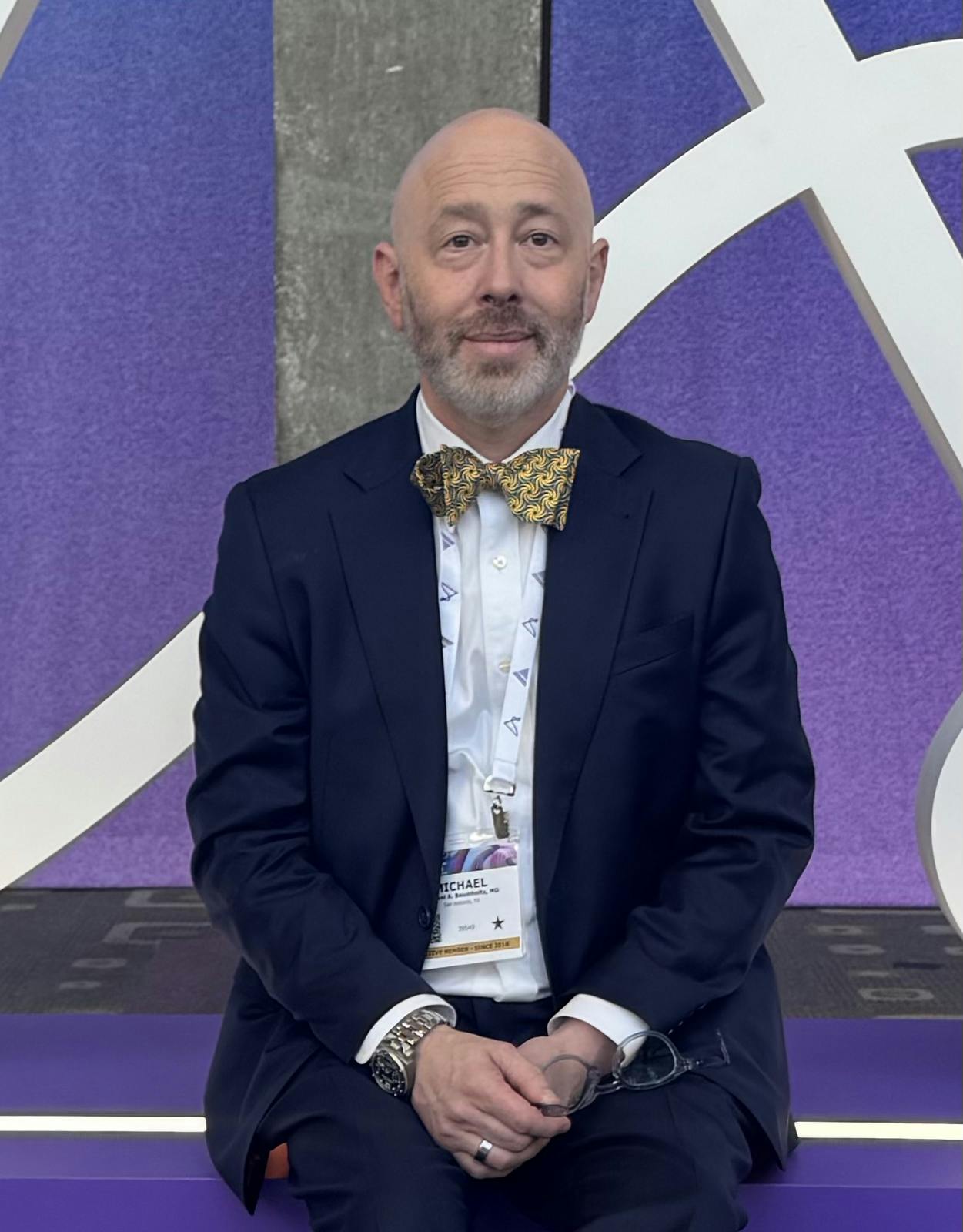
Meet Dr. Michael Baumholtz — or simply “Dr. B” — one of San Antonio’s most respected and trusted board-certified plastic surgeons. Known for his warm personality and remarkable precision, Dr. B combines artistry, experience, and honest communication to deliver natural, confidence-building results. Patients appreciate that he tells them what they need to know, not just what they want to hear — ensuring every transformation is guided by expertise, safety, and integrity.
With dual board certifications in General and Plastic Surgery, Dr. B brings decades of advanced training from world-class institutions including Baylor College of Medicine and the University of Texas Health Science Center. His rare blend of academic excellence, technical mastery, and genuine compassion has made him the surgeon of choice for discerning patients seeking aesthetic excellence. As former Division Chief of Plastic Surgery at the Audie L. Murphy VA Hospital and an educator of future surgeons, he sets the standard for quality and care.
Beyond the operating room, Dr. Baumholtz has authored or co-authored more than a dozen peer-reviewed publications and book chapters and delivered over 40 national and regional presentations. A guest oral examiner for the American Board of Plastic Surgery and Executive Committee Member of the Texas Society of Plastic Surgeons, he continues to advance surgical education while mentoring the next generation of physicians.
When you choose Dr. B, you’re choosing more than a surgeon — you’re partnering with a skilled artist who listens, educates, and delivers. His boutique, patient-focused practice offers a calm, supportive environment where every detail matters, from consultation to recovery.