

Surgical vs. Non-Surgical Body Contouring: Which One Do You Actually Need?
y Dr. Michael Baumholtz, MD, FACS — Double Board-Certified Plastic Surgeon · Published October 8, 2026

The difference comes down to one thing: surgery removes tissue, non-surgical treatments do not. If your concern is loose skin, surgery is the only approach that removes it. If your skin is firm and the issue is a stubborn pocket of fat or mild laxity, non-surgical treatment may be enough. No device tightens skin the way an operation does.
📌 Key takeaways
- Loose skin requires surgery. No non-surgical device removes excess skin.
- Mild laxity and small fat pockets often respond well to non-surgical options.
- Non-surgical treatments need a course and ongoing maintenance.
- Surgery costs more upfront and typically delivers a bigger, longer-lasting change.
- Neither is a weight-loss method. Both contour; neither replaces weight management.
Start With the Right Question
Most people begin by asking “surgery or not?” That is the wrong first question.
The useful question is: what is actually causing the shape I do not like? There are three possible answers, and they point to different solutions.
- Excess fat with good skin tone → liposuction, or in mild cases non-surgical fat reduction.
- Loose or hanging skin → surgery, because skin has to be removed.
- Mild laxity and crepey texture → non-surgical skin tightening can genuinely help.
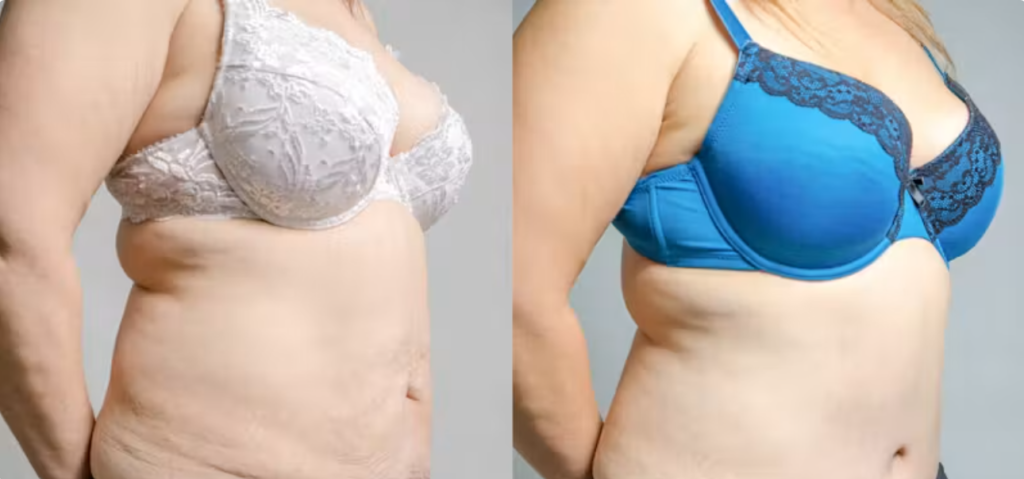
A simple test at home: pinch the area. If you can grasp soft tissue that springs back, the issue is largely fat. If the skin stays loose and does not retract, that is laxity, and no device removes it.
Learn more about Arm Lift (Brachioplasty) in San Antonio
What Each Approach Actually Does
| Surgical | Non-surgical | |
|---|---|---|
| Removes tissue | Yes — fat, skin, or both | No skin removal; some treatments reduce fat volume |
| Best for | Loose skin, significant fat, muscle separation | Mild laxity, small fat pockets, texture |
| Sessions | One operation | A course, plus maintenance |
| Downtime | Weeks | Little to none |
| Results visible | Immediately, refining over months | Gradually over 3–6 months |
| Scarring | Permanent scars, placement planned | None |
| Longevity | Long-lasting with stable weight | Requires maintenance |
| Anaesthesia | Yes | No |
The Surgical Options
Surgery is the right answer when tissue has to come out.
- Liposuction removes stubborn fat from the abdomen, flanks, thighs, arms, back and chin. Requires good skin elasticity to produce a smooth result.
- Tummy tuck removes loose abdominal skin and repairs separated muscles. The only option that addresses diastasis recti.
- Arm lift and thigh lift remove hanging skin from the upper arms and thighs, usually after major weight loss.
- Brazilian butt lift uses liposuction plus fat transfer to reshape the buttocks.
- Mommy makeover combines abdominal and breast procedures after pregnancy.
Learn more about Chemical Peels in San Antonio
What surgery asks of you
- Recovery time measured in weeks, with activity restrictions.
- Permanent scars, placed to be hidden but not invisible.
- Stable weight before and after, since gain or further loss changes the result.
- Higher upfront cost, from [SURGERY PRICE RANGE]. See pricing and financing.
The Non-Surgical Options
Non-surgical treatments work by stimulating the body’s own processes rather than removing tissue.
- Radio frequency skin tightening — heats deeper layers to contract existing collagen and stimulate new collagen over three to six months. Best for mild to moderate laxity.
- Microneedling — improves texture and stimulates collagen, primarily for skin quality rather than contour.
- Avéli — a minimally invasive treatment that releases the fibrous bands causing cellulite dimples.
- Medical weight loss — not contouring, but relevant for patients whose goal is overall weight reduction first.
What non-surgical treatment asks of you
- Patience. Results build over months rather than appearing immediately.
- A course of sessions, typically several weeks apart, plus maintenance.
- Realistic expectations. The change is a refinement, not a transformation.
- Ongoing cost, from [RF PRICE] per session, which adds up across a course.
Where Patients Go Wrong
Three mistakes come up repeatedly in consultation.
Expecting a device to do a surgeon’s job
Non-surgical treatments are marketed heavily, and the marketing rarely says what they cannot do. A patient with significant loose skin after major weight loss will not get it removed by any device, however many sessions they pay for.
Choosing liposuction when skin is the problem
Removing fat from an area with poor skin elasticity can make looseness more obvious, not less. This is why assessment matters more than the procedure you arrived wanting.
Learn more about Laser Hair Removal in San Antonio
Treating contouring as weight loss
Neither approach is a weight-loss method. Liposuction removes localised fat deposits; it does not reduce overall body weight meaningfully. Patients get the best results when they are at or near a stable weight first.

When Combining Makes Sense
These are not competing categories. Many patients use both at different points.
- Non-surgical first, for patients not ready for surgery or wanting to see what a smaller change looks like.
- Surgery first, then maintenance, using non-surgical treatments to address skin quality afterwards.
- Different areas, different approaches — surgery for the abdomen, skin tightening for the arms.
- Staged after weight loss, with surgery once weight has been stable for a period.
How to Decide
Three questions usually settle it.
- Is there loose skin? If yes, surgery is the only approach that removes it.
- How much change do you want? Non-surgical delivers refinement. Surgery delivers a different shape.
- What can you accommodate? Recovery time, scars and upfront cost on one side; repeat sessions, slower results and ongoing cost on the other.
The advantage of consulting a practice that offers both is a straight answer. A med spa that only sells devices has no option but to recommend devices. A surgeon who also offers non-surgical treatment can tell you when a smaller intervention is genuinely enough and when it would waste your money.
Learn more about Radio Frequency Skin Tightening in San Antonio
Not sure which category you fall into? That is exactly what a consultation determines. Dr. Baumholtz offers both surgical and non-surgical body contouring and will tell you honestly which fits your anatomy and your goal.
Book a consultation or call +1 210-880-3708.
Frequently Asked Questions
Does non-surgical body contouring actually work?
Yes, within limits. Non-surgical treatments produce real but moderate improvements in skin firmness, texture and small fat deposits. They do not remove loose skin or deliver the degree of change surgery produces, and most require a course of sessions plus maintenance.
Can non-surgical treatments tighten loose skin?
They can improve mild to moderate laxity by stimulating collagen, which firms skin that has lost some tone. They cannot remove excess skin. If skin hangs or does not retract when you let it go, surgery is the only approach that addresses it.
Is liposuction better than non-surgical fat reduction?
Liposuction removes more fat in one session and gives a more predictable contour, but requires anaesthesia and recovery. Non-surgical fat reduction suits smaller pockets in patients who want no downtime. Skin elasticity is the deciding factor for both.
How much does body contouring cost in San Antonio?
Surgical procedures carry a higher upfront cost than non-surgical treatments, though a full course of non-surgical sessions plus maintenance narrows the gap over time. Current starting prices for all procedures are listed on the practice’s financing and pricing page.
Is body contouring a weight-loss treatment?
No. Both surgical and non-surgical body contouring reshape specific areas rather than reducing overall body weight. Results are best when patients are at or near a stable weight before treatment, since later weight changes alter the outcome.
Can I combine surgical and non-surgical body contouring?
Yes, and many patients do. Common combinations include surgery for areas with loose skin and non-surgical treatment for areas with mild laxity, or non-surgical maintenance after a surgical result. Timing between them is planned at consultation.
How long do body contouring results last?
Surgical results are long-lasting provided weight stays stable, though skin continues to age naturally. Non-surgical results require maintenance sessions, typically once or twice a year, because the treatment stimulates collagen rather than removing tissue.
How do I know if I have loose skin or just fat?
Pinch the area and release it. Tissue that springs back indicates fat with reasonable skin elasticity. Skin that stays loose or hangs indicates laxity. A surgeon assesses this properly at consultation, since the answer determines which treatment will work.
Is non-surgical body contouring safe?
These treatments have a good safety record when performed by trained providers after proper assessment. Risks are lower than surgery but not zero, and certain conditions and implanted devices rule some treatments out. Disclose your full medical history at consultation.
Should I lose weight before body contouring?
Yes in most cases. Reaching a stable weight first produces a better and more durable result, because later weight changes alter the contour. Surgeons generally advise waiting until weight has been steady for a period before operating.
About the author. Dr. Michael Baumholtz is a double board-certified plastic surgeon in San Antonio, Texas, offering both surgical body contouring and non-surgical treatments through the practice’s med spa. Read his full profile.