How to Prepare for Your Gynecomastia Consultation
How to Prepare for Your Gynecomastia Consultation
A good gynecomastia consultation produces a clear answer: what the tissue actually is, what can be done about it, and what that involves. Getting there takes about fifteen minutes of preparation — a medication list, a rough timeline, and your questions written down. The checklist below covers all of it.
Key takeaways
- The examination is the point. Glandular tissue and fat feel different, and that distinction decides everything.
- Bring your medication and supplement list. Several common ones contribute to gynecomastia.
- Duration matters more than size when a surgeon is judging whether it will resolve on its own.
- You are not deciding on the day. A consultation is an assessment, not a commitment.
What Actually Happens at the Appointment
Most men have never had a consultation like this and arrive without a clear picture of it. Knowing the shape of the appointment removes most of the apprehension.
A typical gynecomastia consultation runs thirty to sixty minutes and covers four things:
- Your history — when it started, how it has changed, medications, weight history, family history
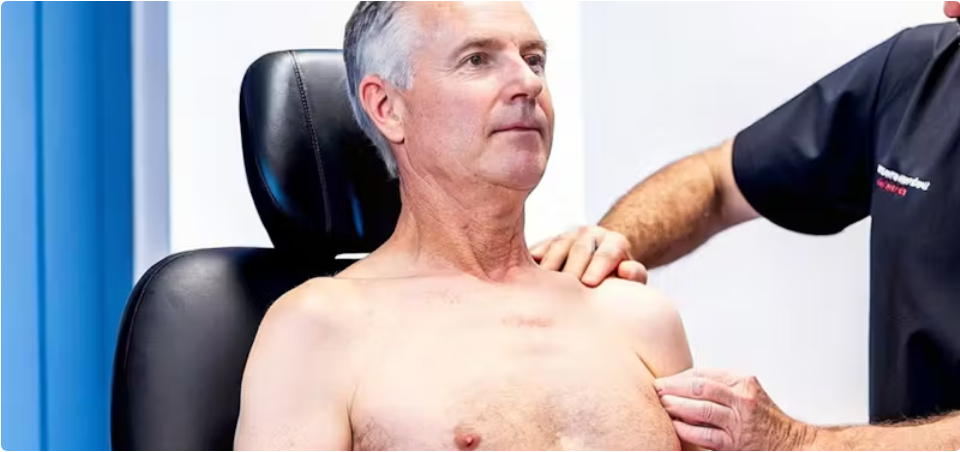
- A physical examination of the chest, usually brief
- What the tissue is — glandular, fatty, or a mix of both
- The plan — technique, incision, recovery, cost, and whether anything needs investigating first
About the examination
This is the part men most often dread, and it is worth being direct about.
The surgeon needs to feel the chest because glandular tissue and fat are different to the touch. Gland is firm and rubbery and concentrated beneath the areola. Fat is softer and spread more evenly.
You cannot tell these apart from a photograph, which is why an in-person examination is required before a surgical plan is finalized.
The examination is brief, it is done privately, and you can ask for a chaperone to be present. If it helps, say at the start that you find it uncomfortable — it is an extremely common thing to say in that room.
What to Gather Before You Go
Five things, none of which take long, and all of which make the appointment more useful.
1. Your timeline
Roughly when did it start? Has it grown, stayed the same, or fluctuated? Is one side different from the other?
Duration is one of the strongest indicators of whether tissue is likely to resolve on its own. Tissue present and unchanged for more than a year or two has usually become fibrous.
2. Every medication and supplement
This is the item most often incomplete, and the one most likely to change the assessment. Include:
- Prescription medications, current and recent
- Over-the-counter medicines taken regularly
- Supplements — protein powders, pre-workouts, testosterone boosters, anything bought online
Several common drug classes are recognized contributors to gynecomastia. Identifying one does not necessarily change the surgical plan, but it changes the conversation about recurrence.
Never stop a prescribed medication because of something you read. Bring it up with the doctor who prescribed it.
3. Weight and health history
- Your highest weight and your current weight
- How long your weight has been stable
- Any thyroid, liver or kidney conditions
- Any previous chest surgery, imaging or biopsy
4. What outcome you actually want
“I want it gone” is understandable but imprecise. More useful: is it the puffiness under the nipple, the overall size, the way shirts sit, or the shape when you lean forward?
Naming the specific thing that bothers you makes the surgical plan more precise.
5. Your questions, written down
Appointments move quickly. Questions you were certain you would remember evaporate. Bring them on paper or on your phone.
The Thing Men Most Often Leave Out
Anabolic steroid use. It comes up far less often in consultations than its actual prevalence would suggest.
It matters for two reasons, neither of them moral:
- It identifies the cause, which affects whether an endocrine workup is needed
- It affects recurrence. Properly excised gland does not regrow, but continuing the trigger can produce new tissue
Surgeons ask about it the same way they ask about alcohol or smoking — as a clinical variable. The answer changes the timing and the recurrence conversation, not how you are treated in the room.
The same applies to supplements bought online, which sometimes contain undisclosed hormonal ingredients.
Questions Worth Asking
These are the questions that produce genuinely useful answers:
- Is my tissue glandular, fatty, or both? This determines everything that follows.
- Which technique do you recommend for me, and why? Liposuction alone, excision, or a combination.
- Where will the incision be, and what will the scar look like?
- How long until I can lift again? Usually the question that matters most to gym-goers.
- How long is the compression garment worn?
- What does the quote include? Surgeon’s fee, anesthesia, facility, garments, follow-ups.
- What happens if I need a revision?
- Do you think anything needs investigating before surgery?
Your Consultation Checklist
Print this or screenshot it. Everything above, condensed.
Bring with you
- List of all medications, current and recent
- List of all supplements, including anything bought online
- Highest weight, current weight, how long stable
- Relevant medical history — thyroid, liver, kidney, endocrine
- Any previous chest imaging, biopsy or surgical records
- Insurance card and details
- Your written questions
- A loose, easy-to-remove top
Be ready to answer
- When did you first notice it?
- Has it grown, stayed the same, or fluctuated?
- Is one side different from the other?
- Is there any pain, tenderness or discharge?
- Any anabolic steroid or hormone use, past or present?
- What specifically bothers you most about it?
Before you leave, make sure you know
- Whether your tissue is glandular, fatty or both
- The recommended technique and why
- Where the incision sits and the expected scar
- Recovery timeline, including return to lifting
- The total cost and what it includes
- Whether anything needs investigating first
- What the next step is
What Happens Afterwards
You will not be asked to decide on the day. A consultation is an assessment and a conversation.
Most men take the information away, think about timing and cost, and come back. Some find an underlying cause needs addressing first. Some are ready to schedule.
All three are normal outcomes. A practice that pressures you toward a decision in the room is telling you something worth noticing.
Booking a gynecomastia consultation in San Antonio? Dr. Michael Baumholtz is double board-certified in plastic surgery and general surgery, with more than two decades of experience in San Antonio.
About gynecomastia surgery · Virtual consultation · Request an appointment
Frequently Asked Questions
What happens at a gynecomastia consultation?
A gynecomastia consultation covers your history, a physical examination of the chest, a discussion of whether the tissue is glandular or fatty, and a recommended plan. Expect questions about duration, medications and weight history. Most appointments take thirty to sixty minutes.
What should I bring to a gynecomastia consultation?
Bring a full list of medications and supplements, your weight history, any relevant medical records or previous imaging, your insurance details, and written questions. If you have photographs showing how the chest looked at different points, those can help establish the timeline.
Will the surgeon examine my chest?
Yes. A physical examination is how a surgeon distinguishes firm glandular tissue from soft fat, and that distinction determines the whole surgical plan. The examination is brief, done privately, and a chaperone can be present if you prefer.
Do I need to tell my surgeon about steroid use?
Yes. Anabolic steroids are a recognized cause of gynecomastia, and continuing them after surgery raises the chance of the problem returning. Surgeons ask without judgment because the answer changes the plan and the timing, not because of how you got here.
What questions should I ask a gynecomastia surgeon?
Ask whether your tissue is glandular, fatty or both, which technique they recommend and why, where the incision will sit, what the scar will look like, how long recovery takes, what the quote includes, and what happens if a revision is needed.
Will I need blood tests before gynecomastia surgery?
Sometimes. If the change is recent, one-sided, painful or rapidly growing, or if the history suggests an underlying cause, your surgeon may want hormone levels or other tests before discussing surgery. This is about identifying the cause, not delaying treatment.
Can I have a virtual gynecomastia consultation first?
A virtual consultation is a useful first conversation about your goals and the general approach. It cannot replace a physical examination, because distinguishing glandular tissue from fat requires feeling the chest. An in-person evaluation is needed before a surgical plan is finalized.
Will I have to decide on surgery at the consultation?
No. A consultation is an assessment and a conversation, not a commitment. Many patients take the information away, think about timing and cost, and come back later. A surgeon who pressures you to decide on the day is telling you something useful about the practice.
The Short Version
Bring a complete medication list, a rough timeline, your weight history, and your questions in writing.
Be straightforward about supplements and steroids — the answer changes the plan, not the reception you get.
And leave knowing one thing above all: whether what you have is gland, fat, or both. Everything else follows from that.